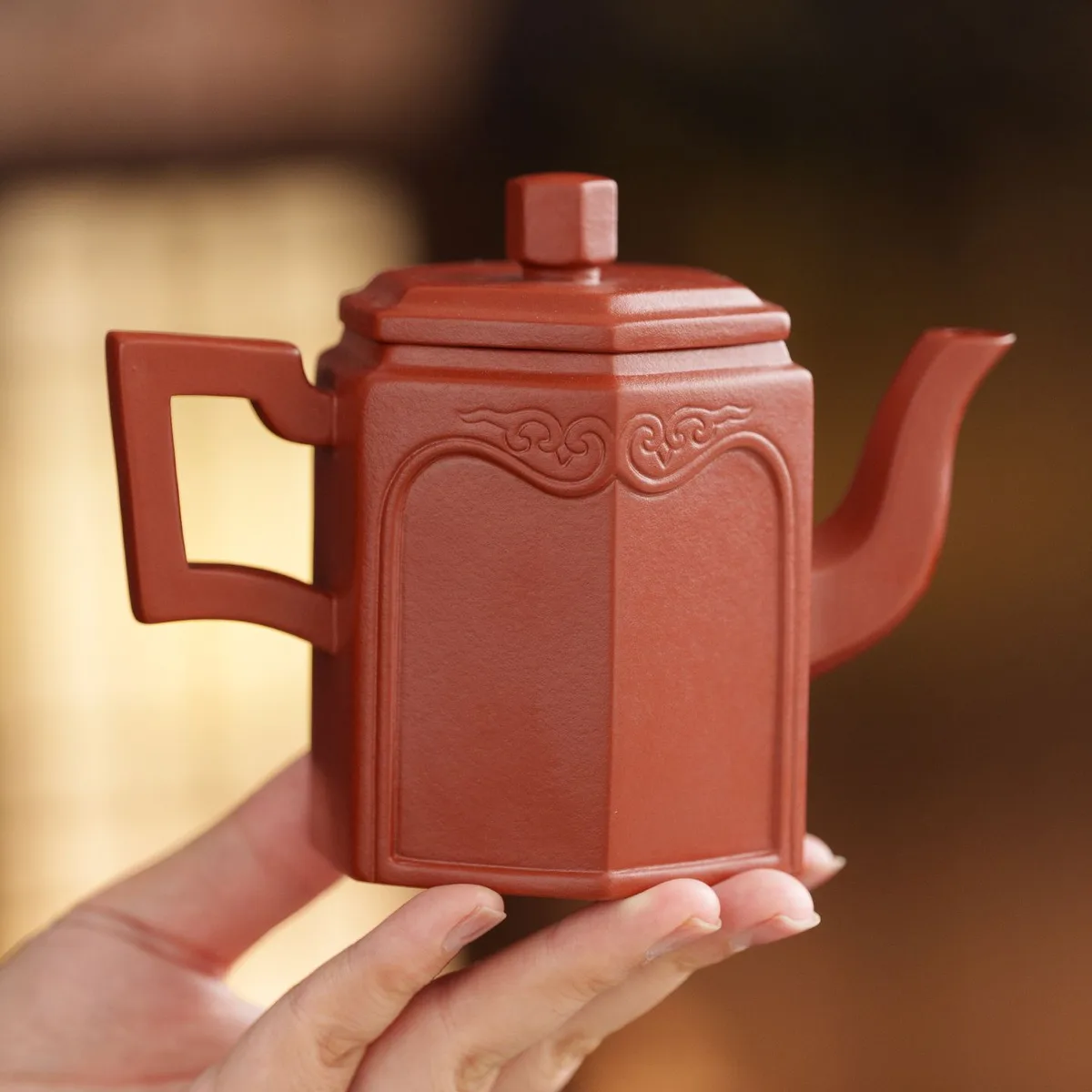
Yixing Zisha Six-Sided Lantern Teapot with Pouring Note 220ml
SKU: NW-009
$49.17/ 把
$49.17
1
Unit: 把- Sourced direct from Chaozhou
- Delivered in Vietnam
- 15-day returns
- Free replacement if broken in transit
Payment
CODMoMoZaloPayVisaMastercardBank transfer
✓ Direct from Source✓ Vietnam Delivery
Specifications
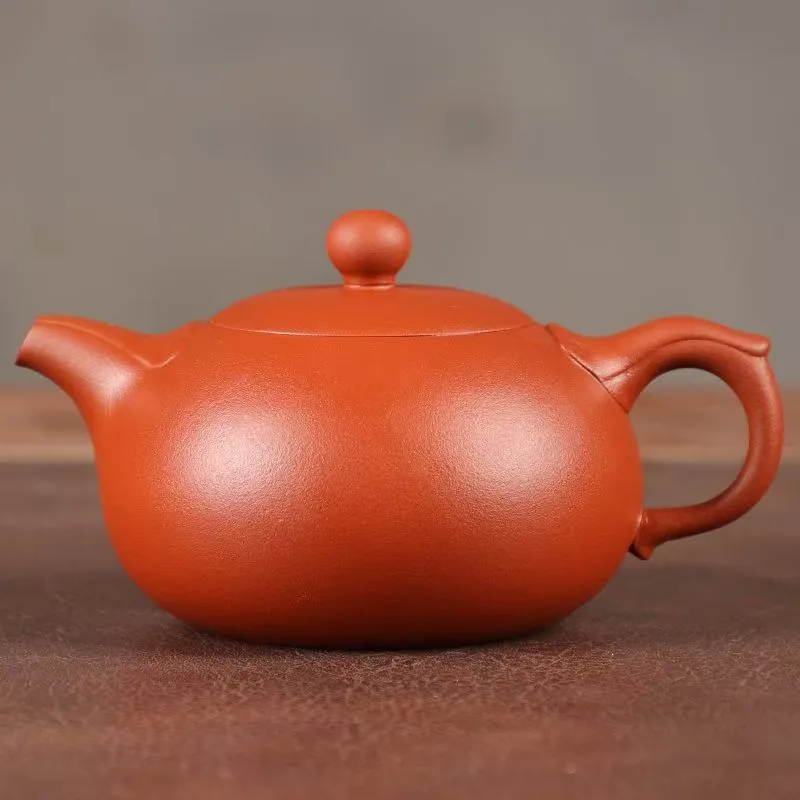
Clay and originYixing zisha, card states original orange-peel clay; the orange-red is the fired clay itself, not a surface coating
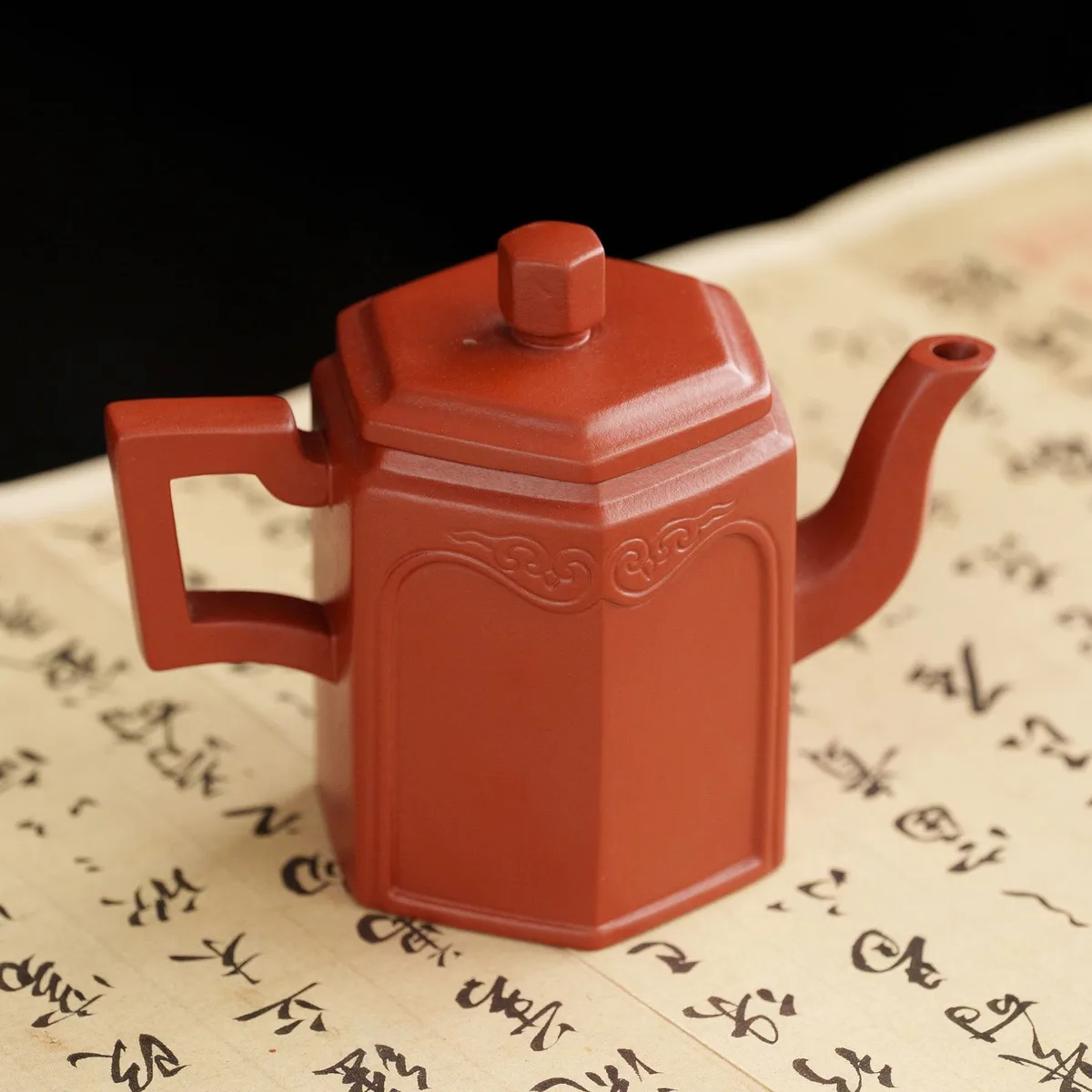
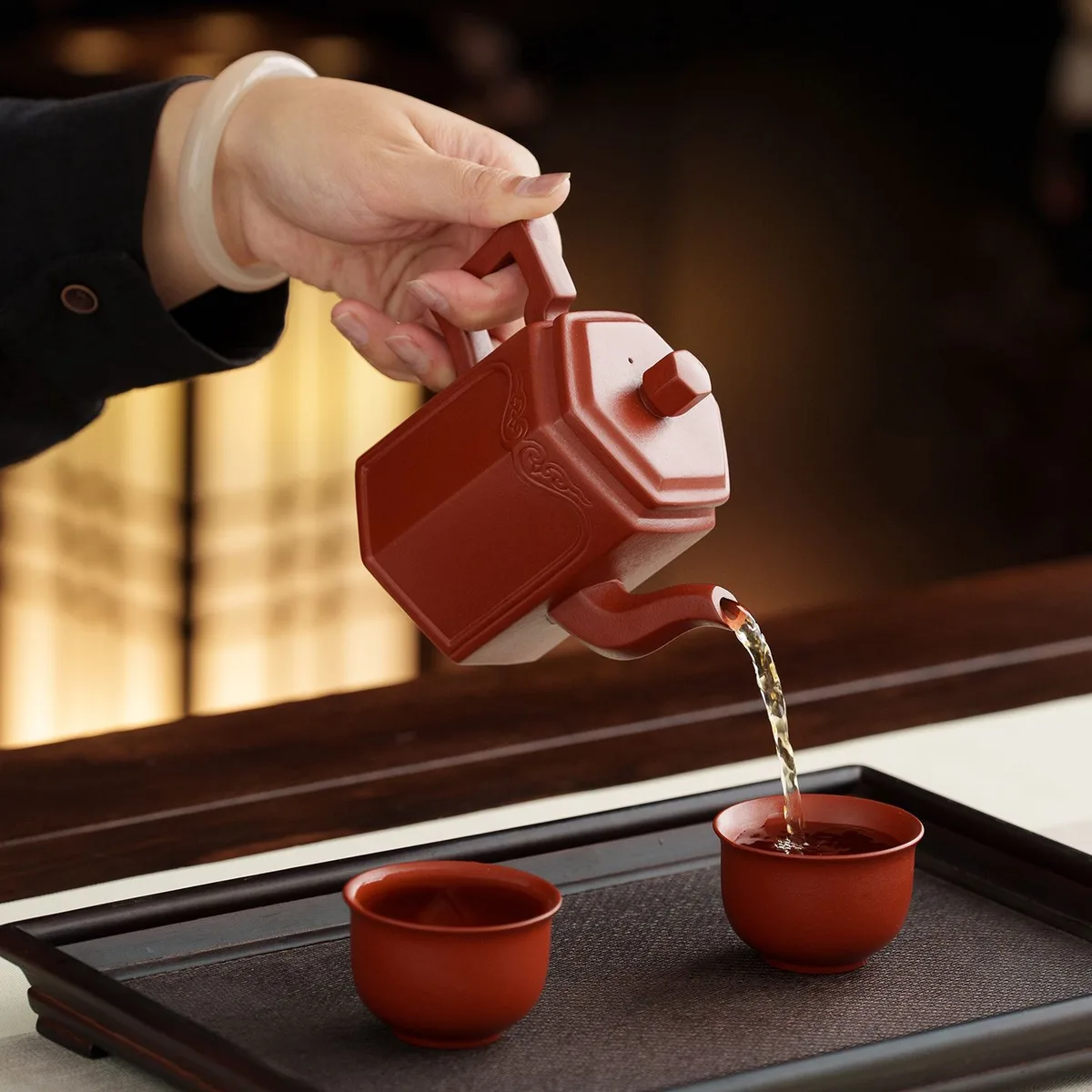
ShapeSix-sided lantern form: square column body, six flat panels with straight edges, square bail handle, short spout, square lid and knob
Body decorationRaised cloud motifs on the shoulder, continuing across the turns of all six panels
CapacityApprox. 220ml; enough for three or four small cups when brewed strong, and suitable for lot-by-lot tasting
MeasurementsHeight 10.5cm; width printed as 14.cm with empty decimals on the card, kept verbatim with the source noted; unlisted items are not estimated, ruler photographs available
Knob and lid rimSquare lid and knob with four corners to align; check the fit on an empty dry pot, never lift by the knob with water inside or wet hands
Pouring and cut-offShort spout, a single continuous stream and a crisp cut-off; the video keeps the full pour including the pause after stopping
Pouring noteA faint note may sound on pouring, varying with water level and tilt; no fixed promise and no basis for grading
Measured sizeThe specification card reads width 14.cm, height 10.5cm, capacity 220mL; the empty digits after the decimal point in 14.cm are a clerical error and are kept verbatim without correction or guesswork; height 10.5cm and 220ml are unambiguous; mouth diameter, spout length and weight are not stated and are left blank
Product photos & details
Description
Shape: a six-sided lantern pot, not a round pot with corners added
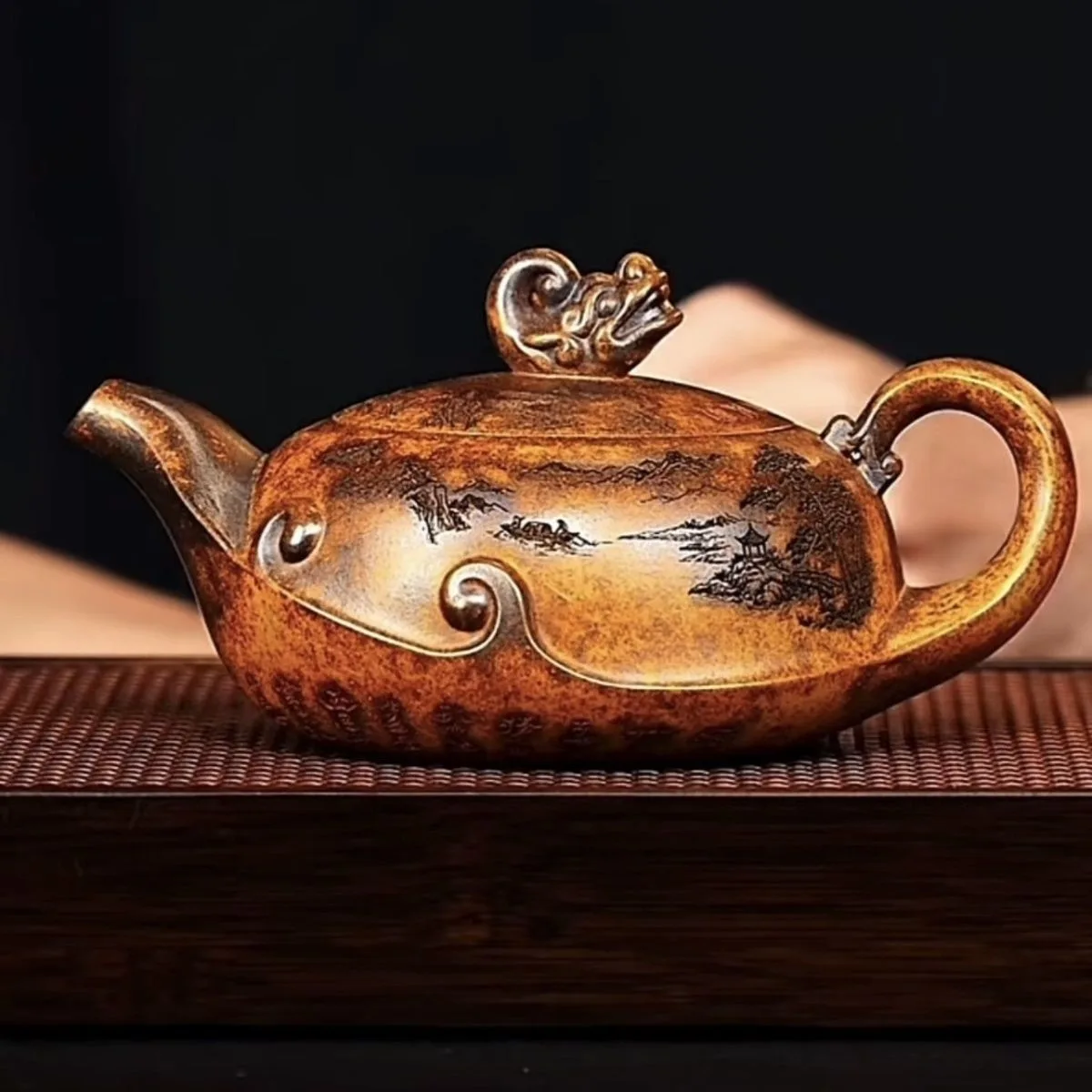
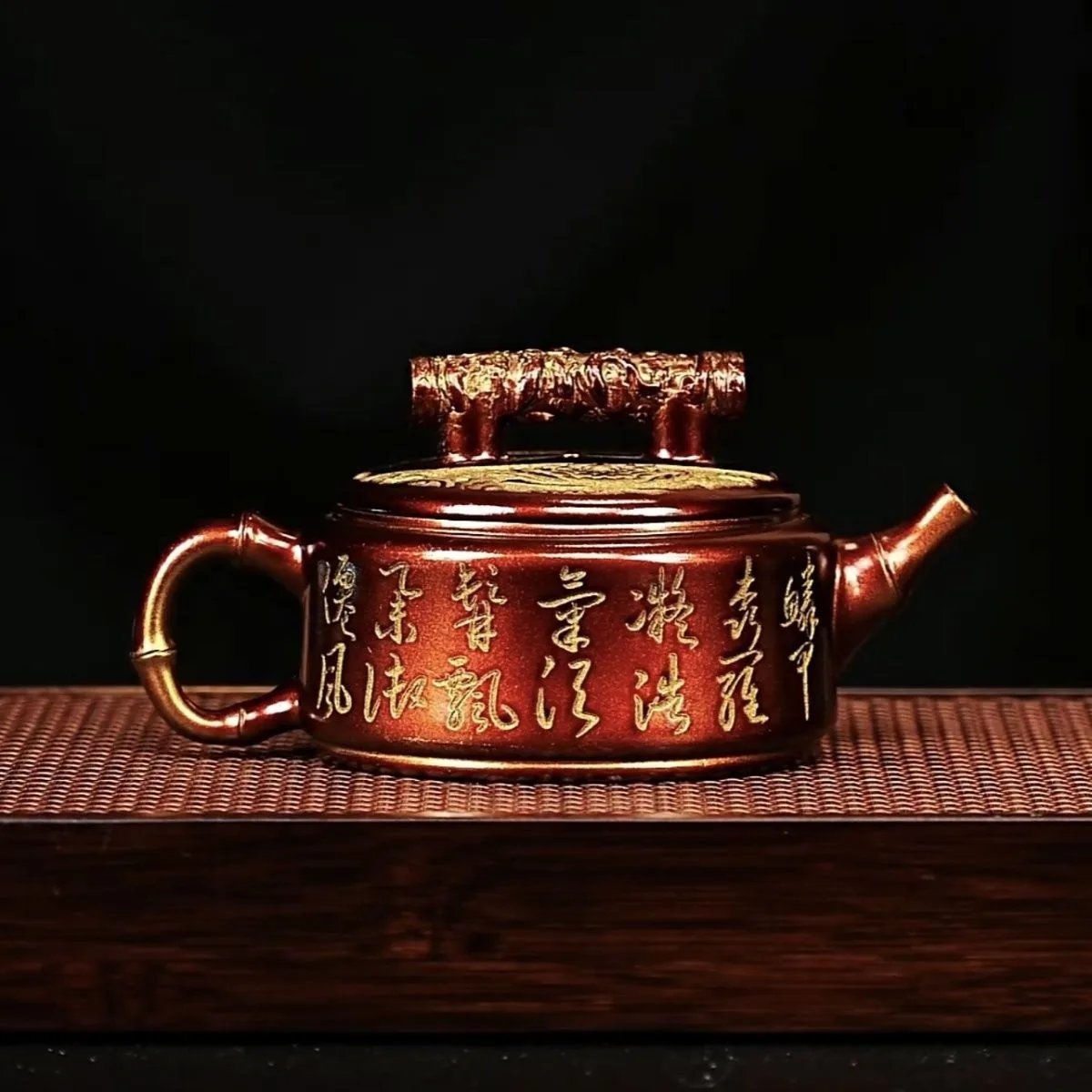
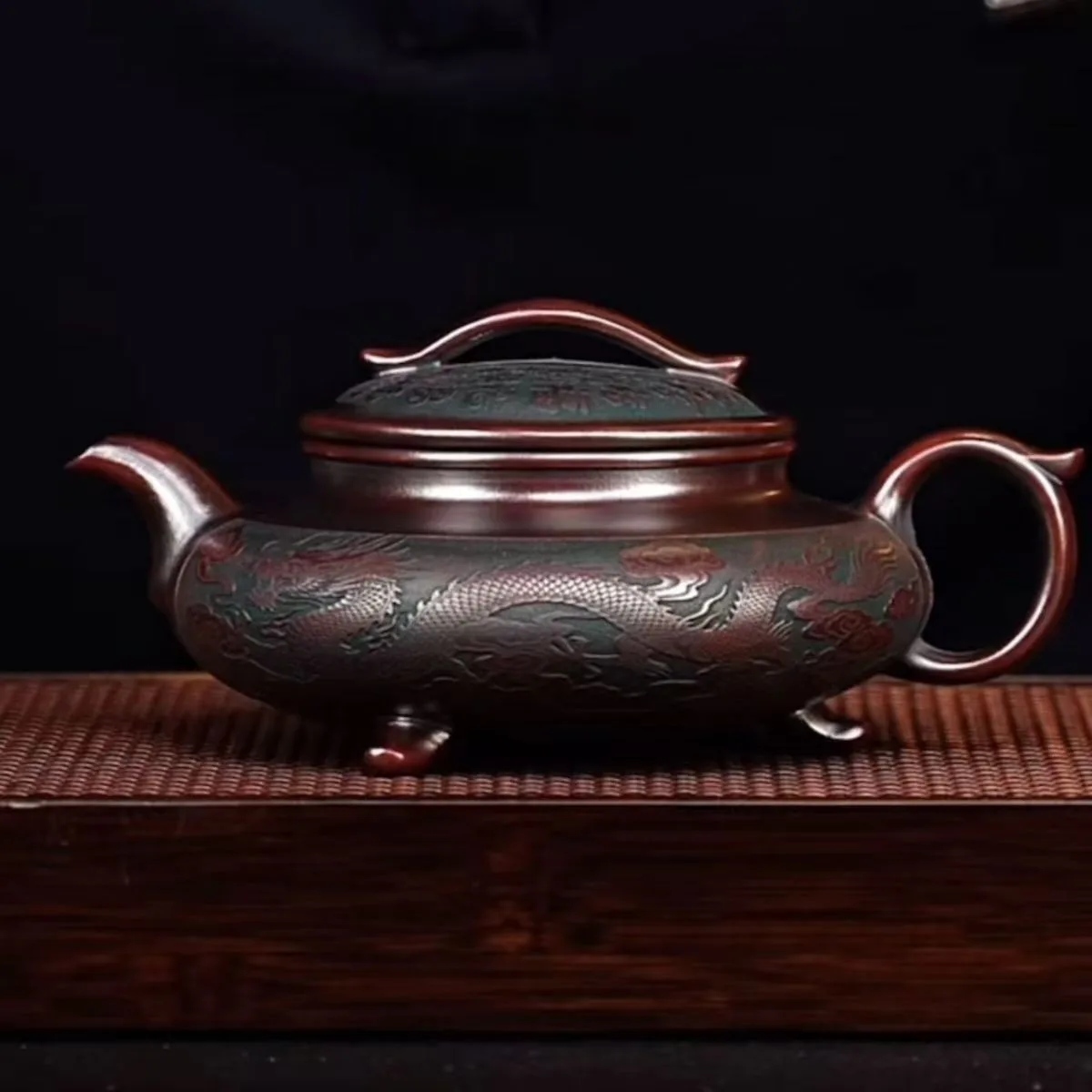
This is a Yixing zisha teapot in the six-sided lantern form, holding 220ml. The body stands upright like a square column, with six flat panels arranged around it and straight edges running from top to bottom without being rounded off. The lid is square and so is the knob. A square bail-style handle and a short spout sit on opposite sides of the body. A band of raised cloud motifs runs along the shoulder, following the turn of each panel. The maker calls this shape a lantern, after the many-sided frame of an old palace lantern. We use the name only to describe a shape you can check, not to explain a school of making on your behalf, and we attach no title or grade to the pot.
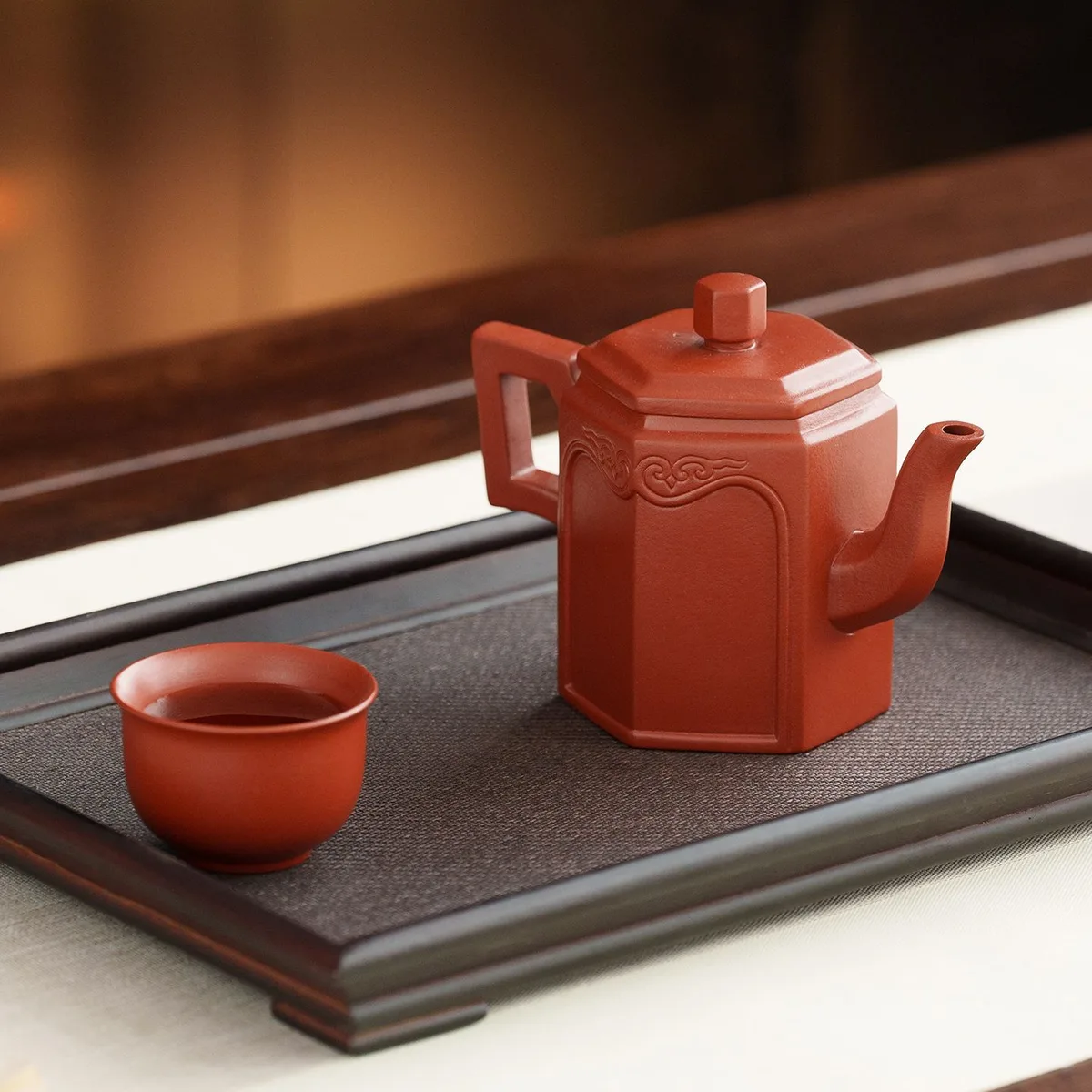
Set a six-sided pot beside a Xishi or a Shipiao and the difference is plain without any explanation. A round pot draws itself in along one continuous curve. A six-sided pot stands on six flat panels and the straight lines between them. For the strong brewing habits common in Vietnam, that difference is practical as well as visual: the inside of a square body is regular, leaves do not catch at the shoulder, and when you lift the lid you can see straight down to the floor of the pot. In the gallery we kept a front view, a view of all six panels, the pot resting in an open palm, and the pot on a tray with cups. Check the shape first, then go through the details one by one.
One point should be stated clearly. Lantern, gathering wealth, and similar names are all the seller's names for a shape. They describe form only. They are not a certificate, not a production year, and not a collecting grade. We do not use those names to push a price, and we do not write about titles, awards, or the idea that the pot will become more valuable later. What you need to judge is the pot in front of you: are the six panels flat, are the edges straight, is the square handle firmly joined, and does the water cut off cleanly.
Six panels: the joints are the hard part
A round pot is thrown from one ring of clay and then smoothed into a curve. A six-sided pot has to be built from separate flat slabs joined one to another, with every edge standing straight and no panel sagging or leaning out of line. To inspect one, set it on the table, bring your eyes level with it and look down each of the six edges from top to bottom. The edge should run continuously, without a stretch that suddenly blunts or dips inward. Then rotate the pot slowly: the six panels should be close in width, with no single face bulging out while its neighbour pulls in.
Three places show faults most readily. The first is the vertical seam between two flat panels. The second is the root of the square handle where it meets the body. The third is the fit between the square lid rim and the mouth of the pot. The seam should be smooth, with no split and no lump of surplus clay. The handle root should be clean, with no obvious patch of filler clay, and a finger drawn along the inner face should not catch. The lid rim should drop naturally into place, should not feel loose when you rock it gently, and should not bind when you turn it. We photographed all three places. Shoot the same angles when your stock arrives and matching them against the pot on hand becomes straightforward.
Small differences between pots in the same batch are normal. On a hand-joined square pot, the straightness of an edge, the depth of a cloud motif and the tone of the orange-red under two kinds of light cannot be as identical as moulded goods. That is ordinary batch variation. A whole panel caving in, an edge breaking partway down, a crack at the handle root, or the cloud motif blurring into one flat smear is not batch variation. Set those pots aside, photograph them and send the pictures over; there is no need to sign for the whole batch in a hurry.
Square pots are built from separate slabs joined panel by panel, then trimmed along the edges once half dry. A seam that opens in firing, or an uneven slab that leaves one panel slightly concave, shows up in raking daylight, so photograph the edges beside a window rather than under a direct flash.
Clay and colour: the orange-red comes from the clay and the kiln
The accompanying card describes the clay as original orange-peel material, and after firing the body turns an orange-red. That colour comes from the clay itself and the fire of the kiln, not from a coat of red paint or a coloured glaze laid over the surface. For someone brewing strong tea every day, this is the useful part: boiling water poured again and again has no layer to peel, no colour to fade and nothing to leach into the tea. The pot does not take over the aroma. After a few weeks the surface develops a soft, low sheen and feels gentler in the hand than when new. We describe what can be seen; we do not use it as an argument about the pot gaining value with time.
Do not judge colour from a single photograph. Take one in daylight and one under the shop spotlights, at the same angle and distance, with no colour filter. Orange-red reads deeper under warm light and leans more orange in daylight, which is a normal response from the same pot to two light sources. But the transition across the whole body should stay even: no patch should suddenly turn grey, white or much darker. We keep both lighting angles in the gallery. When your stock arrives, reshoot those same two angles and comparing across batches later becomes much faster.
Cleaning is uncomplicated. Rinse the inside with plain water, turn the pot upside down to dry and put it away. No detergent, and no stiff brush on the surface. The straight edges of a square pot hold tea residue longer than a round curve, so a soft cloth drawn along each edge is enough. There is no reason to rub on oil, apply wax or soak the pot in tea just to bring up a sheen sooner; those treatments close the surface and only add explanations you will have to give your own customers later. We make no promise about what colour the pot will reach after a given number of months. We only record what can be seen and repeated.
Measurements: three figures, copied exactly
The specification card supplied with the batch reads width 14.cm, height 10.5cm, capacity 220mL. One point has to be stated plainly: on the card the digits after the decimal point in 14.cm are empty. That is a clerical error by the seller. Following our consistent practice, we keep the figure exactly as printed, do not change it to 14.5 or any other value, and do not guess what the seller meant to write. The product page notes that this figure comes verbatim from the specification card. The height of 10.5cm and the capacity of 220ml are unambiguous. The card gives no mouth diameter, no spout length and no weight, so we leave those fields blank rather than estimate them or borrow numbers from a different shape.
If you need the width to work out where the pot will sit on a tray, do not calculate from a figure that was printed incorrectly. Message us and we will lay a ruler directly against the pot that will be shipped and send a photograph with the ruler in place. A number used for three jobs at once, ordering, arranging a tray and writing a product page, should come from a ruler photograph of that actual pot. That is more reliable than any restatement of it. For customers bringing in several dozen at a time this matters more: measure the intended space first, then match it against one ruler photograph, and the rest of the conversation gets much shorter.
220ml is a very workable capacity. With the strong brewing method commonly used, one pot of leaves, water to the right level, and three or four small cups finishes a round neatly, without brewing a large pot that sits and cools. It also suits tasting before committing to a batch: the same pot, the same water volume, two rounds from two lots, and the difference is easier to read. At 10.5cm high the pot sits low on the tray and is less likely to knock a small cup over while pouring. We do not print a conversion into a number of drinkers, because the number of cups really depends on how large your cups are.
Agree on how the figures are measured before writing a catalogue: capacity to the rim with the lid seated, height from table to knob, and width either across the diagonal or including spout and handle. Tell us which reading you need and we will place the ruler that way.
Lid, lid rim and mouth: check the fit while the pot is dry
A square lid in a square mouth is less forgiving than a round one. A round lid can be rotated to find its seat; if the four corners of a square lid do not line up, it will not go in at all. Before lifting the lid off, note which way it was sitting in the mouth. Do the check on an empty, dry pot: lower the rim gently into the mouth and see whether all four corners settle into place; pinch the square knob and lift, sensing whether there is excess play between lid and mouth; rock it lightly from side to side, where it should neither feel obviously loose nor bind so tightly that it cannot be removed.
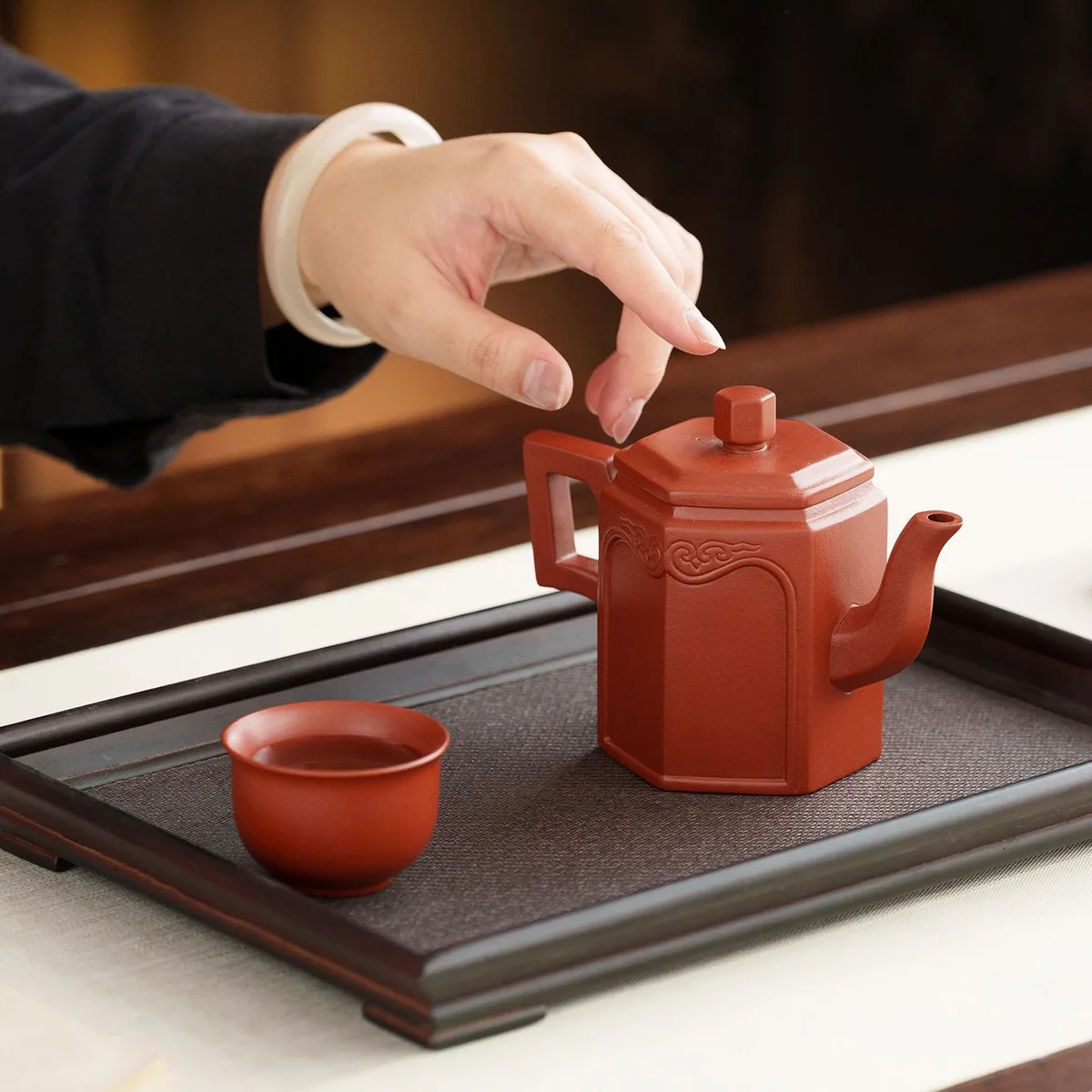
There is a shot in the video where the pot is turned upside down with a hand holding the knob. That is a fit check performed on a dry pot, not a demonstration of how to use it. Do not do it with water in the pot or with wet hands: a slippery grip and a knob under load are both poor ideas. In ordinary use simply lift the lid off in the usual way. We kept that whole shot in the finished video, including the pause while the lid settles back, without cutting it, so you can compare it frame by frame with your own sample.
Before dispatch we open every pot to look at the inside and check the lid rim for chips, then pour plain water through once. When you sample a shipment, take a few pots at random and repeat that order: lid rim against the mouth first, then the inside for residue or chips, then plain water for a test pour. If one pot has a lid that will not sit flat, a chipped corner or a knob that rocks noticeably, separate it and send us a video rather than accepting the whole lot immediately.
Pouring and cut-off: watch one complete pour
This pot has a short spout. Tilt it and the water leaves as a single stream; stop your hand and the flow cuts cleanly, without a trail running down the body. Do not judge from the prettiest half second of the stream. Watch the whole sequence: does it scatter at the start, does it split in the middle, do a few drops fall after you stop? We kept this section intact in the video, including the pause after the hand stops, with no cut in the middle and no slow motion to make the stream look better.
For sampling, plain water is enough; there is no need to use tea. Fill to about seven tenths, seat the lid, pour once at the angle you normally use and watch three things: whether the stream stays continuous, whether the cut-off is clean, and whether any water seeps out along the lid rim. The third point is the one most often skipped, yet it is the most direct signal of whether a square lid is properly seated. Empty the pot afterwards, leave the lid off to dry and move on to the next one; the process stays quick and nothing gets missed.
The note when pouring: a small sound, with no fixed promise
When you tilt the pot to pour, it sometimes gives a small, fine note. Pot makers call it the phoenix note. The sound comes from how the lid, the mouth and the air channel inside the pot work together, so the amount of water, the angle of the tilt and how firmly the knob is pressed all change it. That means it is not equally clear on every attempt, and it should not be assigned a fixed pitch or taken as a sign of grade. In the video this passage keeps its original audio: no effect layered over it and no boost applied just to make it easier to hear.
To be direct: the note is an interesting detail, but it is not the only measure of whether a pot is well made, still less a certificate, a production year or a maker's reputation. The items that deserve checking one by one remain the fit of the lid rim, the six edges, the handle root, the depth of the cloud motif, whether the stream stays together and whether the cut-off is clean. If you do not hear it the first time, change the tilt, reduce the water to seven tenths and pour again. If you still hear nothing, send us a video. We make no guarantee about the sound; we describe it as a phenomenon that can be reproduced with the pot as supplied.
Square handle, grip and display
The pot uses a square bail handle, in the same visual language as the square column of the body. The grip is slightly different from a round handle: rest the thumb along the top edge of the handle, let the remaining fingers support the body from the inside, and the palm can carry the whole base, so one hand holds it steadily. At 10.5cm high with a six-sided base, the pot does not roll on the tray and takes up less room in a row than a round pot. For a shop building a display, the shape has a practical advantage: front, side and forty-five-degree views all give a different outline, so one set of photographs explains the form without extra props.
The handle root carries the most load and deserves the closest look. Run a finger slowly around the inner face of the handle, checking for sharp burrs or a raised lump of filler clay. Then lift the empty pot once and notice whether the root clicks or feels loose. Two photographs in the gallery were taken while the pot was being held, one with the pot in an open palm and one while pouring into a cup. Both are real working positions rather than a pot arranged and then retouched, so they are useful for comparing both grip and proportion.
An inspection checklist for wholesale and retail buyers
If you bring in several pots at once, fix the inspection order and use the same set of angles for every batch. Step one, open each pot and look inside: light should reach the floor of the pot, and you are checking for residue, chips and cracks, with particular attention to the six inner corners. Step two, check how the four corners of the lid rim meet the mouth; on a dry pot, seat it once and rock it gently once. Step three, set the pot level, look down the six edges, then turn it forty-five degrees to judge the depth of the cloud motif. Step four, fill with plain water to seven tenths, pour once to see the stream and the cut-off, and at the same time check for seepage past the lid rim. Step five, take one photograph in daylight and one under the shop lights at the same angle, and file them under the batch reference.
For the record, here is what you can ask us for, so there is no back and forth: ruler photographs taken on the actual pot to be shipped, close views of the six edges, a close view of the handle root, an overhead view of the lid and a view into the body, raking-light close-ups of the cloud motif, two same-angle colour comparison shots in daylight and under shop lights, a complete video of a plain-water pour and cut-off, and a batch-by-batch comparison video shot at the same angles. All of it comes from the pot on hand, not from collected images and not from a different batch substituted in. Just tell us which items you need.
Give each photograph a filename with batch, pot number and angle, then keep the next batch in the same folder. Six months later you can check edge or colour drift without digging through old messages.
Common questions, answered together
Question: will the orange-red fade? Answer: the colour comes from the clay and the kiln, not a surface coating, so daily boiling water has no layer to flake off. If a patch arrives noticeably grey or white, that is not normal change in use; photograph it and send it over for comparison.
Question: can it take boiling water every day? Answer: yes, that is what a teapot is for. Rinse with plain water, turn it to dry and put it away. No detergent, and no stiff brush along the edges.
Question: is a square pot harder to clean than a round one? Answer: the inside is a regular square column, and with the lid off you can see to the floor, so there is no blind corner the hand cannot reach. The inner side of an edge holds residue longer than a curve; a soft cloth along each edge deals with it.
Question: does every pot make the note when pouring? Answer: we do not guarantee it. The sound varies with water level and tilt, clear on some attempts and absent on others. Not hearing it does not affect use and should not be taken as a verdict on the pot.
Question: why is the width written as 14.cm? Answer: that is exactly how the specification card reads, with nothing after the decimal point. We copy it and note the source rather than correcting the seller. For an accurate width, ask for a ruler photograph.
Question: will the colour differ from the photographs? Answer: orange-red shifts in depth between warm shop light and daylight, a normal response from the same pot. We keep two same-angle shots; reshoot at the same angle and they will line up.
Question: can I try a single pot first? Answer: yes. Tell us which version you want to try and which angles you need, and we will reply based on the pot actually in stock.
Question: how do I ask for a price? Answer: the site has no checkout button and sets no time frame for enquiries. Send the quantity and the list of inspection material you need through Zalo, and we will quote from the pot on hand without any urging language.
Gallery, video and how this batch of material was handled
The public gallery has five photographs: the pot front-on in an open palm, the six-panel structure, the pot on a tray with cups, a hand pressing the knob beside a small cup, and water pouring into a cup. One order-page screenshot is kept only as an internal price record; it is not in the gallery and is not used externally. Two pieces of material were not used. One showed the pot on a printed book page with Chinese text along the bottom, and cropping the text away would cut off the base of the pot. The other was a poster-style image with large lettering across the middle, where cropping would destroy both the body and the hand. Consistent with our standing practice, we would rather publish two fewer photographs than cover, patch or paste over anything, since those treatments leave dark bands and smeared areas that are hard to unsee. A second photograph has a background of decorative cursive calligraphy rather than promotional text, and it was kept exactly as supplied, with no processing.
The video runs about 39 seconds. The frame was rebuilt by cropping alone: the status bar, the screen-recording badge, the back arrow, the burned-in Chinese subtitle band and the product card at the bottom were all removed at source by the crop, with no covering or retouching of any kind. Vietnamese subtitles sit in the safe area lower down the frame, so the browser playback controls do not hide them. On sound, exactly as requested for this batch, we replaced only the original Chinese narration with Vietnamese narration. The background music stays from beginning to end at its original level; it is not ducked while the voice speaks, no section is cut, no effect is added and the running time is unchanged. Gold highlighting is reserved for product facts such as six sides, six panels, the cloud motif and 220ml, and is never applied to a sales phrase.
If you pass this on to end customers, point to what the photographs show and leave uncertain points uncertain. A claim you later have to withdraw costs more than a plain answer.
Enquiries and contact
The site has no shop checkout, sets no time frame for enquiries, prints no quantity-sold figure and has no add-to-cart flow. The only action we ask of you is to send a message: tell us the version you want, the quantity and which inspection documents you need, and we will answer from the pot actually in stock, ready to add photographs and video before any further discussion.
We do not compete on being cheapest, and we do not lean on titles, certificates, awards or claims about future value to push a price. Whether this pot is worth bringing in can be answered by the six panels, the edges, the handle root, the lid fit, the pour and cut-off, and the figures 220ml and 10.5cm. Look through the gallery and video first; if they line up, then ask for a price. It saves time on both sides.
Add our contact to request ruler photographs, six-panel close-ups, batch comparison video and the material for this batch: Zalo: 0899286999. The full gallery and details in three languages are at www.tea14888.com.