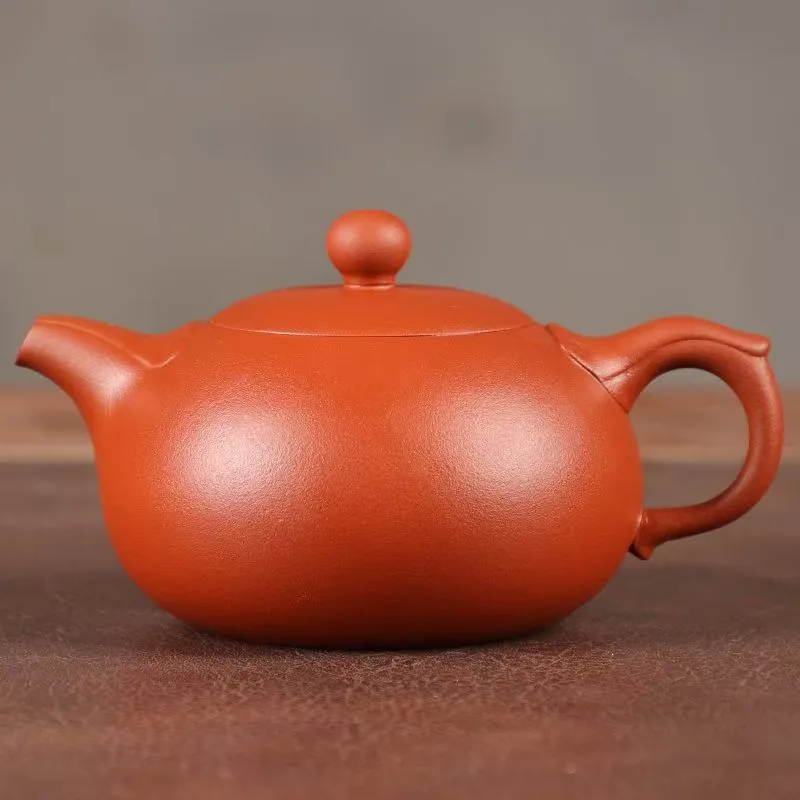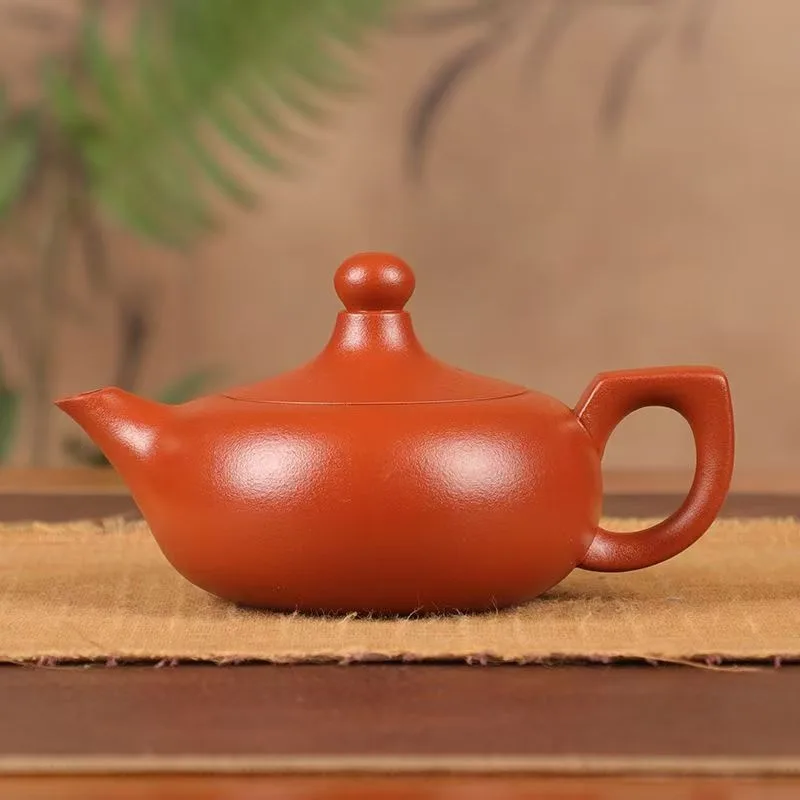
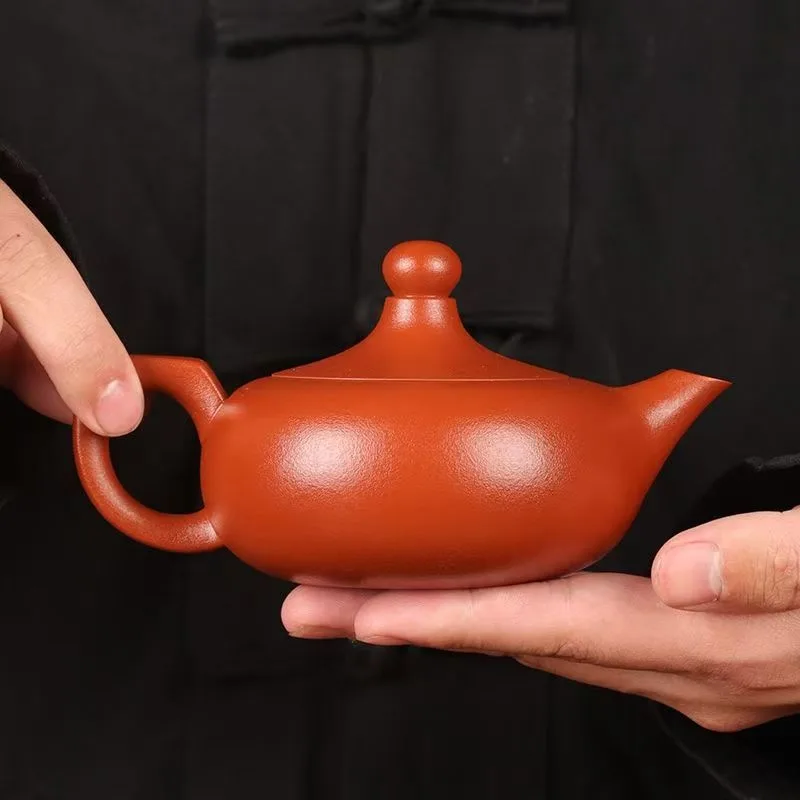
Yixing Orange-Peel Zhuni Hong Yun Dang Tou Teapot 180ml
SKU: NW-010
$69.17 – $149.17/ 把
Price varies by option
Select option
SKU: NW-010-V01
$69.17Hong Yun Dang Tou teapot 180 ml, rotatable lid, whistling
1
Unit: 把- Sourced direct from Chaozhou
- Delivered in Vietnam
- 15-day returns
- Free replacement if broken in transit
Payment
CODMoMoZaloPayVisaMastercardBank transfer
✓ Direct from Source✓ Vietnam Delivery
Specifications
Clay and originOrange-peel Zhuni from Huanglong Mountain; the surface texture is the fired clay itself, not a coating or sandblast; as a natural mineral it varies slightly in colour even within one lot, which is normal
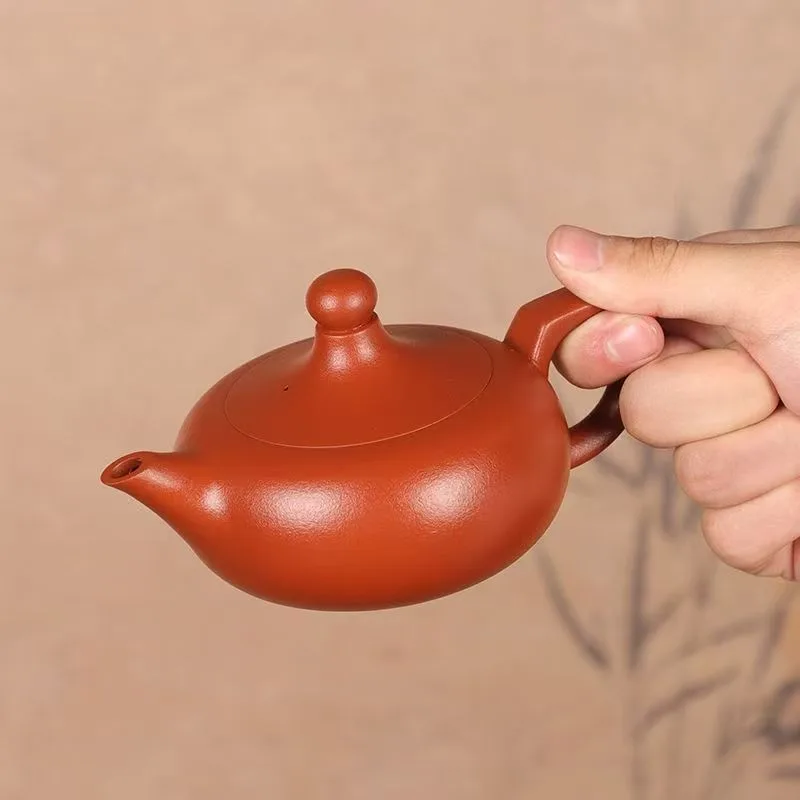
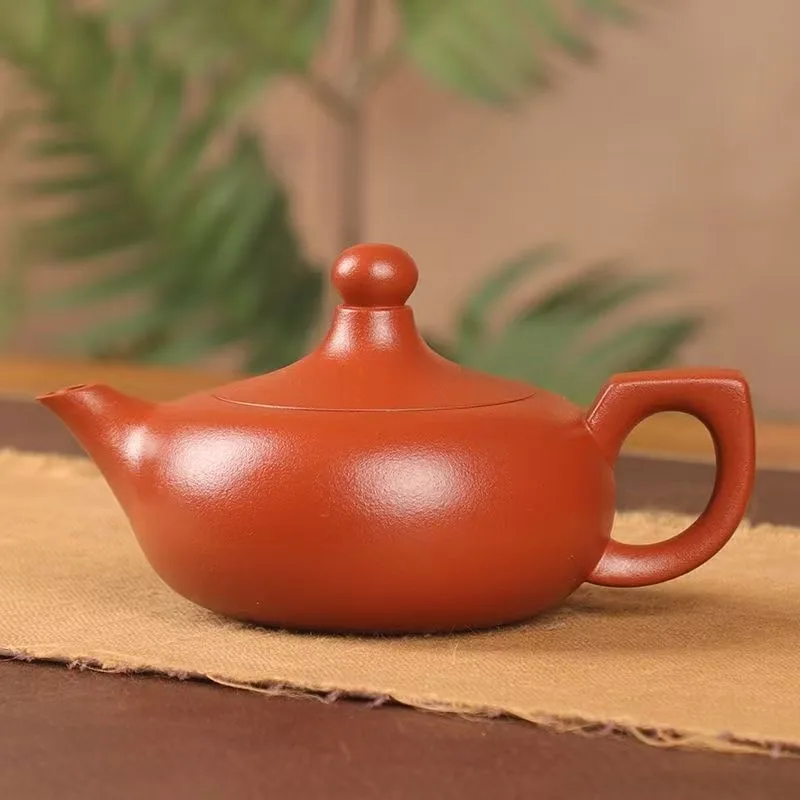
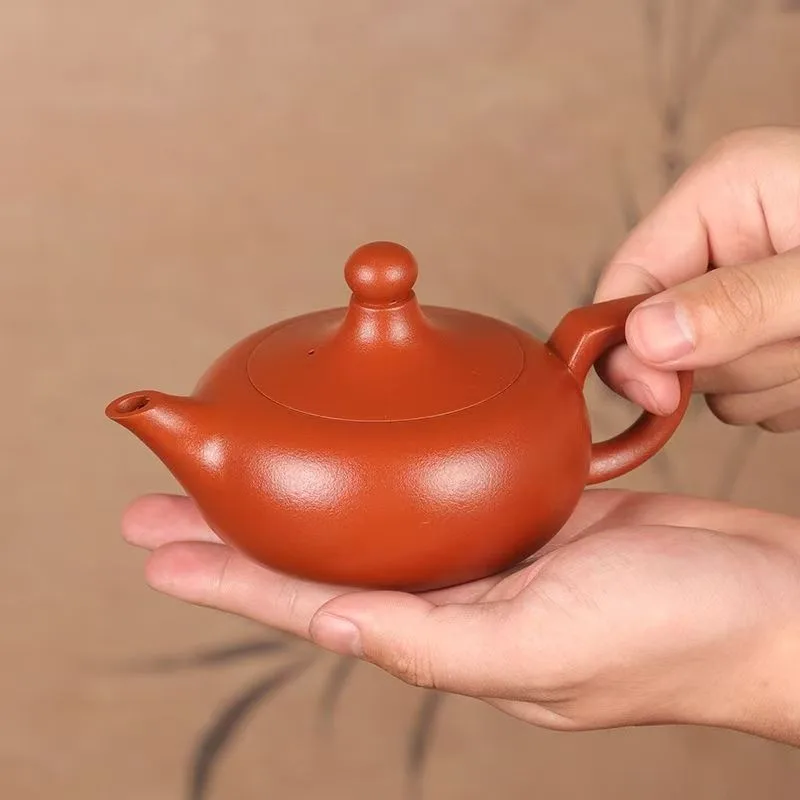
ShapeFlattened round body with a soft crease at the shoulder, pearl knob, flat lid, short upturned spout and ear handle; a different shape from the full round Xi Shi
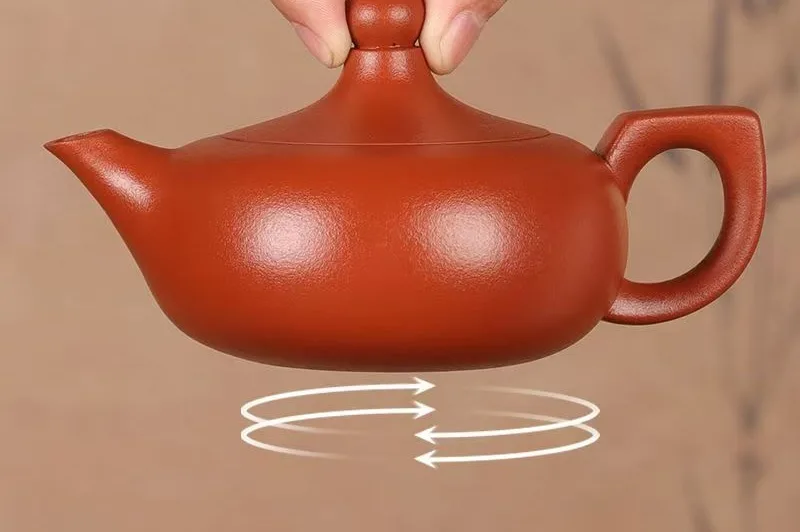
Four checksLift: the whole pot rises by its knob; turn: the body rotates while the lid stays true; invert: the lid stays put upside down; ring: pouring at about 90 degrees gives a faint note whose volume varies with water level and tilt, not a basis for grading
Capacity180ml; three or four small cups when brewed strong, one round for two when brewed light; suits someone with an established tea habit and also lot-by-lot cupping
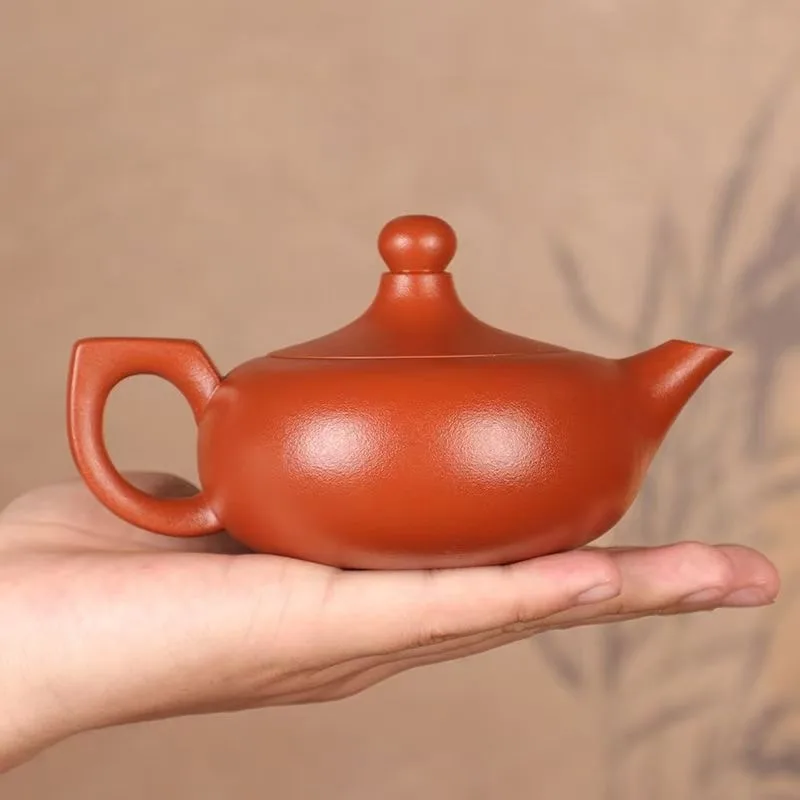
MeasurementsWidth 14.2cm, height 7.1cm, capacity 180ml; mouth diameter, spout length and weight are left blank; ruler photographs available, taken on the pot that will ship
Pouring and filterShort straight spout with a tightened lip gives a clean cut-off and no trailing line; the ball filter holds leaf back better than a single hole and keeps the flow even, and its inner surface needs rinsing right after use
HandleAn ear handle running from shoulder to lower belly; thumb on the top edge, middle finger under the bottom edge, palm clear of the body; the inner opening takes an adult finger, for holding and for cleaning
Use and careFor the first use, rinse with warm water and once with boiling water; no long boil and no rice water. After each use empty, rinse, leave the lid off and dry in shade; no dish soap, no dishwasher; for storage keep it airy rather than sealed
Measured sizeWidth 14.2cm, height 7.1cm, capacity 180ml; all three figures come from the specification card shipped with the lot and read the same on the product images and the order-page thumbnail, with no clerical error and no blank digits; mouth diameter, spout length and weight are not stated and are left blank rather than estimated
Product photos & details
Description
What makes this pot worth a second look is not the price. It is that three separate movements all happen at one contact surface, the lid and the mouth: you can lift the whole pot by the knob, turn the body while holding the knob, and turn the pot upside down without the lid falling. When you pour, air pushed out through the spout gives a short, clear ring.
This is the Hong Yun Dang Tou, made of orange-peel Zhu Ni clay from Huanglong Mountain, 180 ml.
SHAPE: A FLAT BODY, NOT A SPHERE
The body is a flattened round, called a flat belly in the trade. It is a different animal from the familiar round Xi Shi: the Xi Shi is full and round with its weight in the middle of the belly, while this one has a soft crease at the shoulder that divides the body into an upper and a lower section and pulls the visual weight down. A pearl knob sits at the centre of a flat lid, a short spout rises from the shoulder, and an ear handle runs from the shoulder to the lower belly.
A flat body stands steady. It meets the tray over a wide area and does not tip while pouring. The low body also keeps the pot out of your line of sight, so you can see where the tea lands. The trade-off is a shallow interior: you have to watch how much leaf you put in, and the leaves have less room to open than in a tall pot. That is not a fault, it is a choice of shape.
WHAT IT SUITS
If you brew tightly rolled oolong or dan cong, a shallow interior pushes the leaf down to the bottom, where it can block the filter, so you need to reduce the amount of leaf. If you brew loose leaf, broken leaf, or like a fast pour, the flat body is easier to use: the interior is shallow, water rises quickly, and the rhythm is easy to control.
Zhu Ni is dense and breathes less than Duan Ni, so aromatics stay in. It suits aromatic teas: tieguanyin, black tea, yancha, dan cong. Do not use one pot for several kinds of tea. Zisha absorbs smell, and a pot that has held black tea will carry that base note into green tea. One pot, one tea is an old rule, and it holds.
CLAY: ORANGE-PEEL ZHU NI FROM HUANGLONG MOUNTAIN
The words orange peel describe the surface after firing: fine, close-set undulations like the dimples on a citrus rind. It is not a coating and it is not sandblasted on. Up close you can see individual grains, and a finger drawn across it feels slightly rough rather than glassy like porcelain.
Zhu Ni shrinks a lot in the kiln, which is why the colour comes out orange-red rather than deep purple. The colour is made by the clay and the fire. There is no glaze and no colour wash. Daily boiling water has no layer to peel or fade. Over time the surface takes on a soft sheen from the tea, which is what people mean by the pot being fed. A new pot often looks dry and dull; the change appears after a few months of steady use.
One thing should be said plainly: the clay is a natural mineral, so even within one batch there is some variation in depth of colour. That is normal, not a defect.
CAPACITY: 180 ML, AND WHO IT SUITS
180 ml. Brewed strong in the Chaozhou manner, one pot fills three or four small cups. Brewed light for daily drinking, it is one round for two people without constant refilling.
This size suits someone who already has a tea habit. If you drink from a large mug, it will feel small. If you drink slowly from small cups, it is handier than 250 ml and the pour is easier to time. It also works for buyers who cup teas: a small charge of leaf lets you run several lots in a row without over-steeping.
FOUR CHECKS YOU CAN DO YOURSELF
Lift. Hold the knob and pull straight up. If the lid fits, the whole pot comes with it. If the fit is loose, only the lid comes off. Do this with an empty, dry pot and dry hands, otherwise your fingers slip and you learn nothing.
Turn. Keep hold of the knob and rotate your wrist gently. The body turns on your hand and the lid neither shifts nor wobbles. This checks how concentric the lid and the mouth are. If the lid was turned off-centre on the lathe, one turn shows it.
Invert. Turn the whole pot over, knob pointing down. The lid stays in place on its own fit. In the video the pot is held by the handle, upside down, and neither pot nor lid falls.
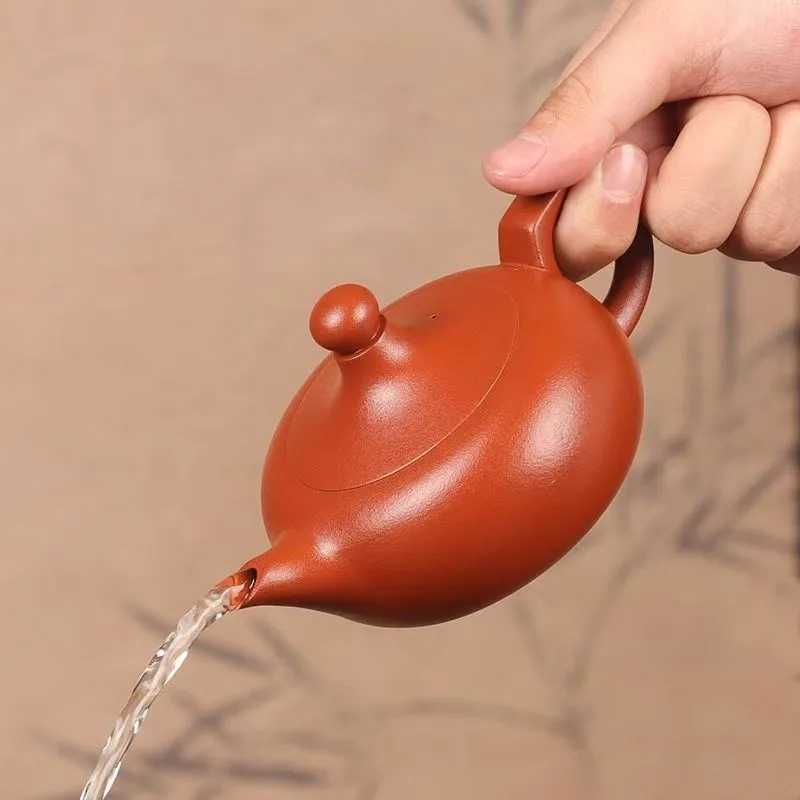
Ring. Tilt the pot to about 90 degrees to pour. Air forced out through the spout gives a short, clear note. How loud it is depends on water level, angle and pouring speed. Not every pot rings the same, and it should not be used to grade quality. It is closer to a by-product of a tight fit than a designed feature.
These four are not adjectives in a listing. They are things you can do in thirty seconds with the pot in your hand. Ask the seller for a video before you buy, then repeat them yourself when the pot arrives. If the pot cannot do all four, the lid and mouth were not fitted properly.
POURING AND THE FILTER
The spout is short and straight with a tightened lip, so the cut-off is clean and no thin line of tea trails after you stop. Inside is a ball filter: a perforated sphere that holds back leaf better than a single hole and keeps the flow even, so a leaf sitting on the opening does not stop the pour.
A ball filter takes a little more cleaning than a single hole. Rinse it right after use, including the inside of the sphere, and do not let leaf collect there.
MEASUREMENTS: THREE FIGURES, ONE SOURCE
Width 14.2 cm, height 7.1 cm, capacity 180 ml. The three figures come from the specification card that ships with the lot. The images on this page and the video show the same set. There is no second version.
Mouth diameter, spout length and weight are not stated. We do not estimate them and we do not scale them off photographs. If you need them, ask for a ruler photograph: the ruler lies on the pot, the reading is visible, and it is taken on the pot that will actually ship.
DAY TO DAY
Before the first use, rinse the pot inside and out with warm water, then once with boiling water. That is enough. There is no need to boil it for a long time, and no need for the old rice-water or used-leaf boil; with Zhu Ni it adds nothing.
After each use, empty it, rinse it, leave the lid off and let it dry in the shade. Do not use dish soap, because zisha absorbs odour and the soap will stay in the pot. Do not put it in a dishwasher. If you store it, keep it somewhere airy rather than sealed in a box.
The lid is the part that chips. When you take it off, set it beside the pot rather than face down on the table where it can be spun. When you pour, rest a finger on the knob instead of holding only the handle with your thumb. These are habits, not faults in the pot.
AS A GIFT
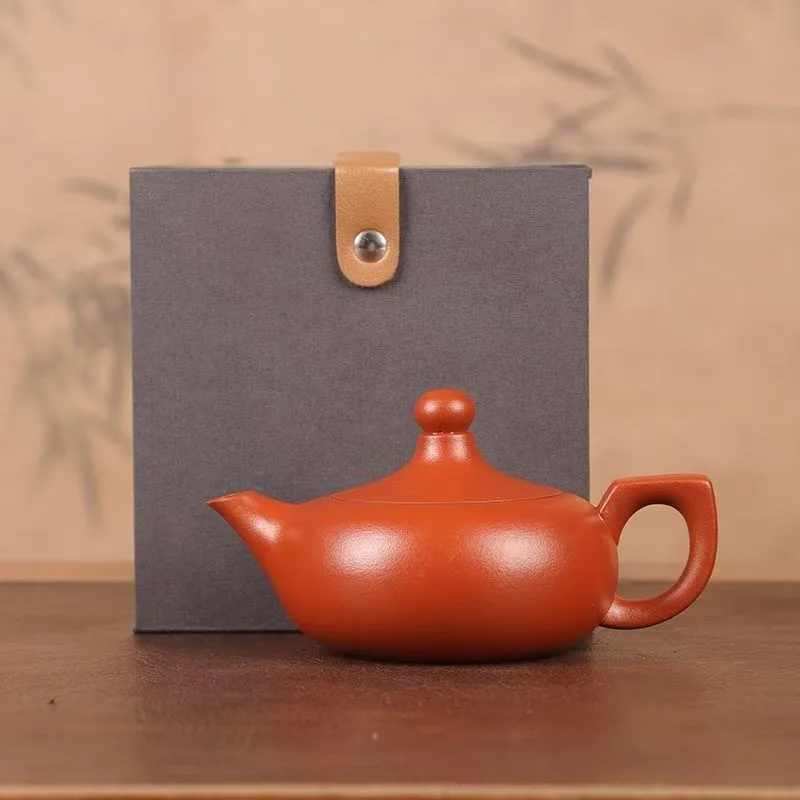
A flat body sits low, takes little height in a gift box, and looks settled. The orange-red is warm and suits most occasions. At 180 ml it is not large, so even someone who rarely brews tea will not leave it in a cupboard because it is too big.
The name reads as good fortune arriving, needs no explanation, and works for a business partner, an opening, or a new home. If you want a boxed set, there are one-pot-two-cup and one-pot-four-cup versions, or the pot alone with a box, depending on local custom.
One caveat: Zhu Ni is a vivid colour. If the recipient prefers quiet grey-green or the muted tones of Duan Ni, this may not be to their taste. Check their preference before giving it.
QUESTIONS WE GET
Will the colour fade? No. The colour comes from the fired clay and there is no coating. With use it only gets glossier, never paler.
Will it crack? Not in normal use. The risk is sudden temperature change: pouring cold water into a pot just rinsed with boiling water, or heating an empty pot on a stove. In cold weather, warm the body with warm water first.
Will the lid loosen over time? No. Zisha does not wear to that point. After ten or twenty years the fit is as it was. What does damage it is a knock that chips the lid rim.
Can it brew green tea? Yes, but Zhu Ni holds aroma, so a pot that has brewed other tea will carry that note into green tea. One pot, one tea.
LOTS AND COMPARISON
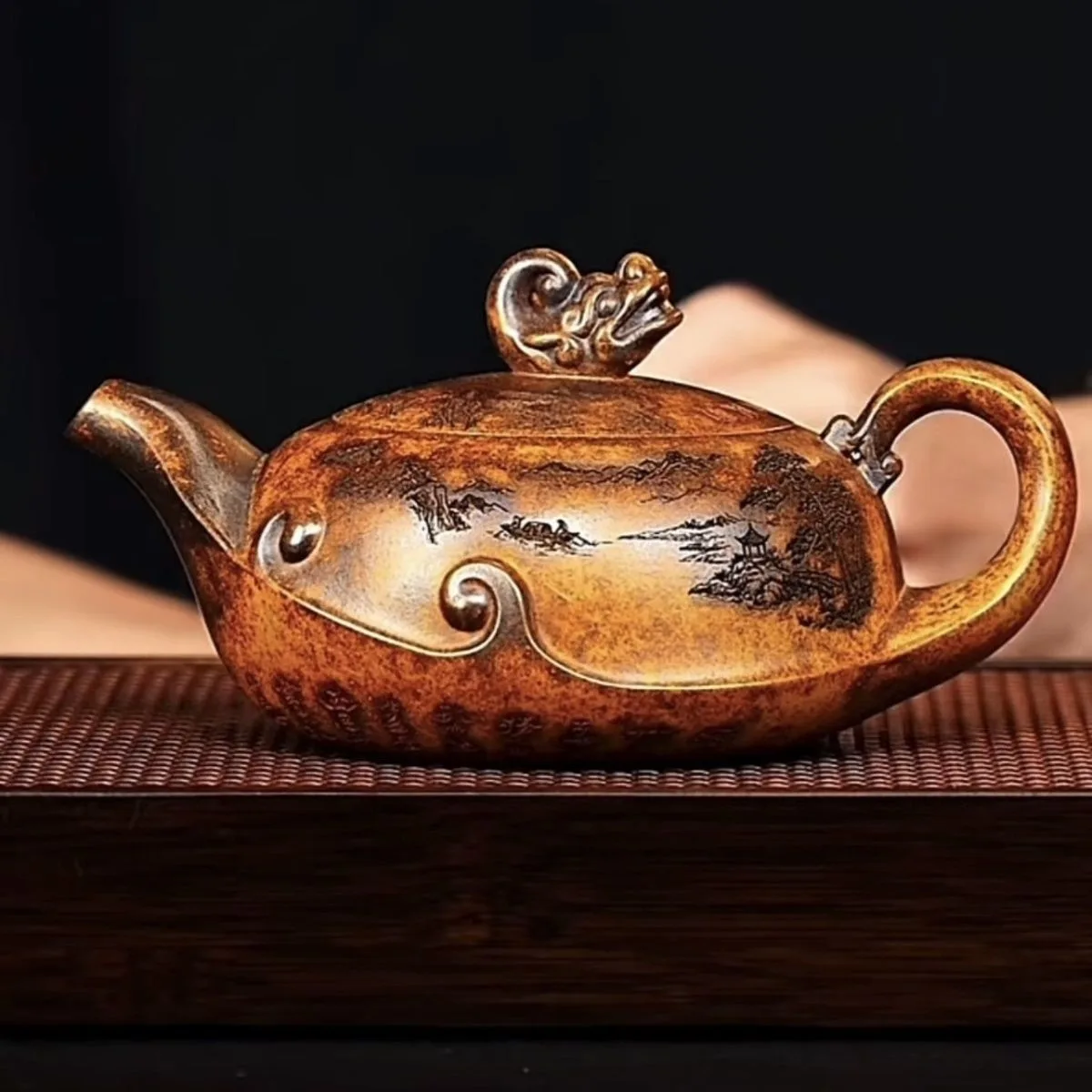
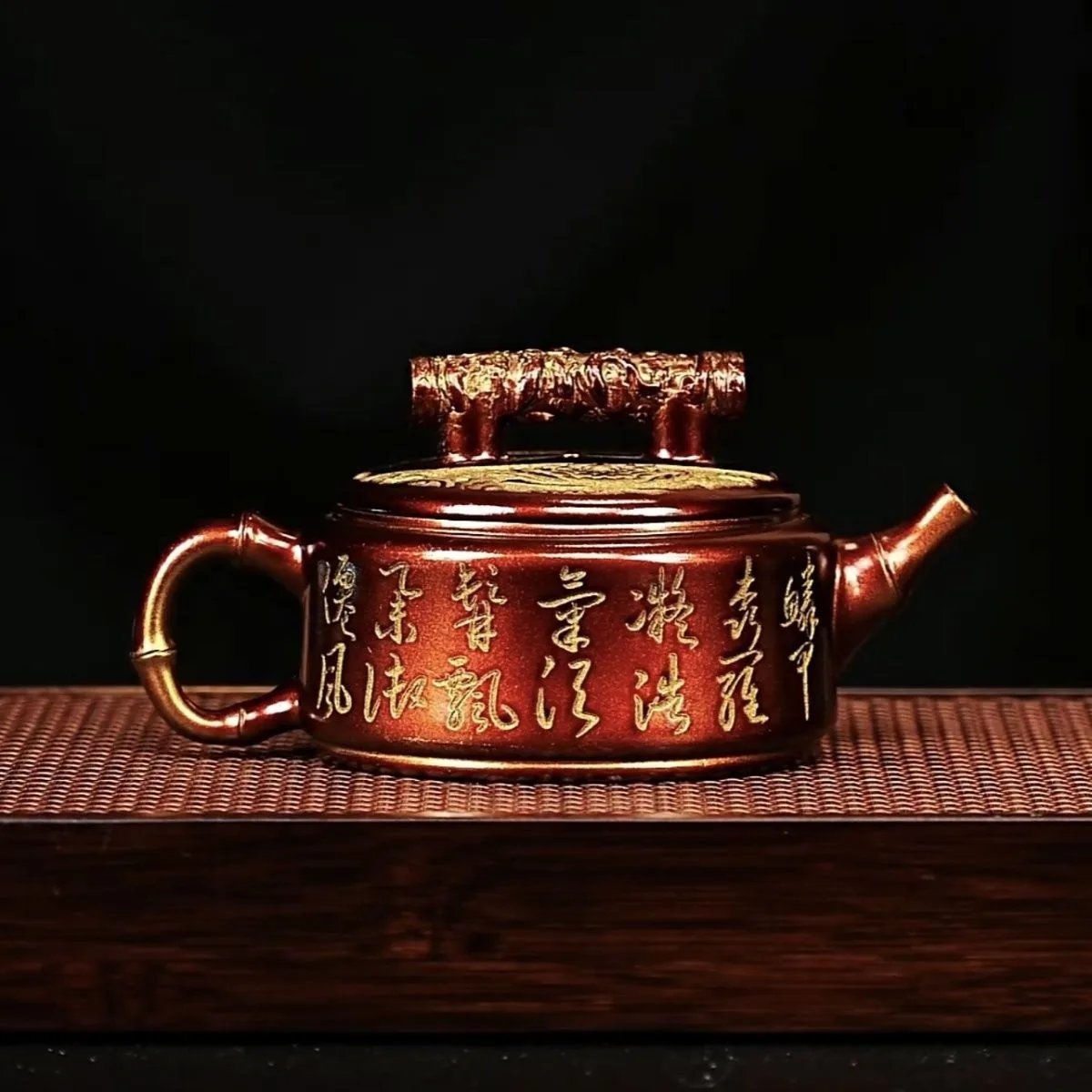
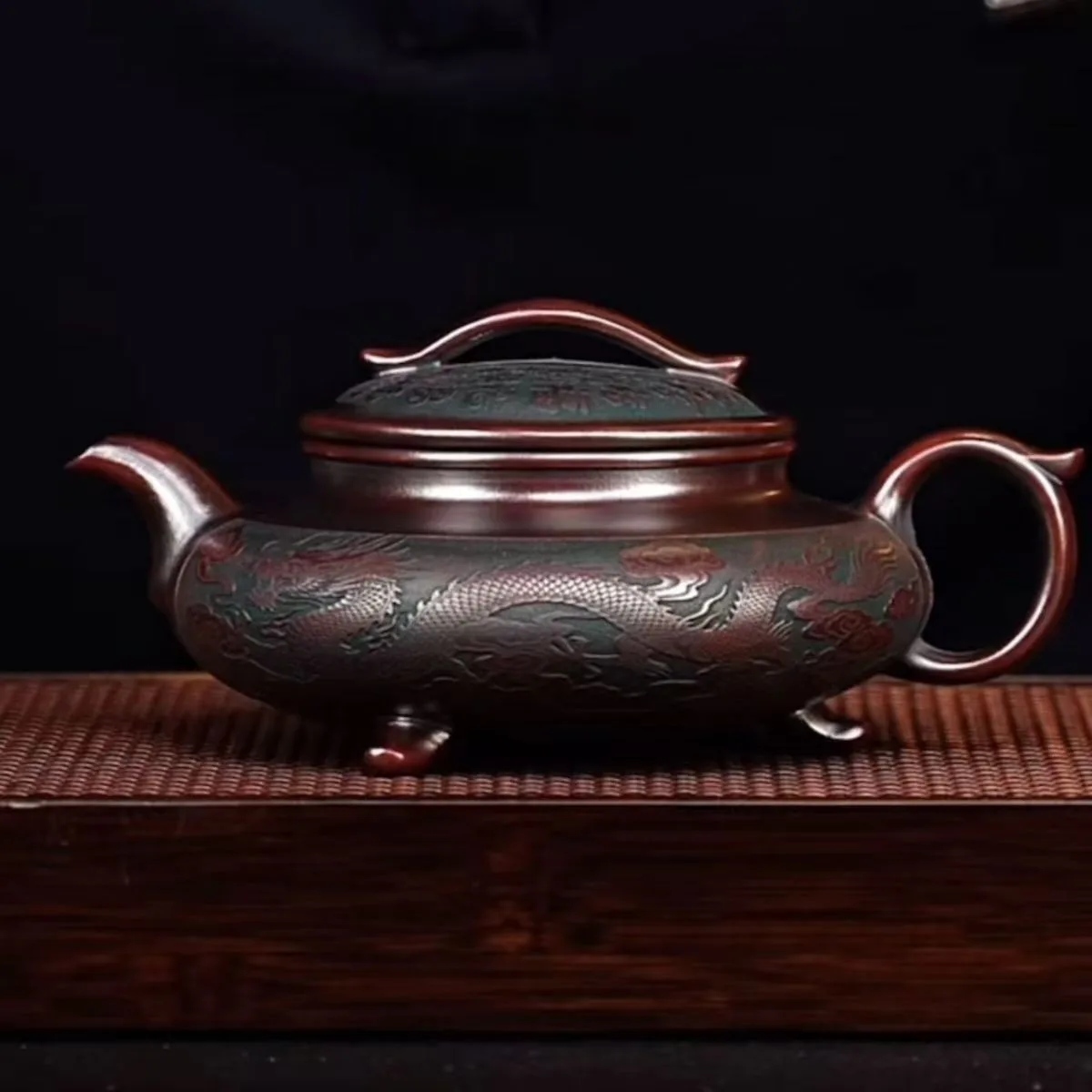
Zisha is a natural mineral. Colour varies slightly from lot to lot, and within a lot some pots are deeper than others. For every lot we shoot comparison photographs and video of the pot that will actually ship. We do not use stock images and we do not use another seller's pictures.
Before ordering, look at the lot comparison and confirm that colour and shape fall within what you can accept, then set the quantity. If you want several lots photographed side by side for colour matching, that can be arranged.
CONTACT
If you want a closer look at any detail, more pots from the same lot, a ruler photograph, or a full unedited pour with clean water, just send a message. We shoot the angle you ask for and you do not have to wait for it.
Zalo: 0899286999
www.tea14888.com