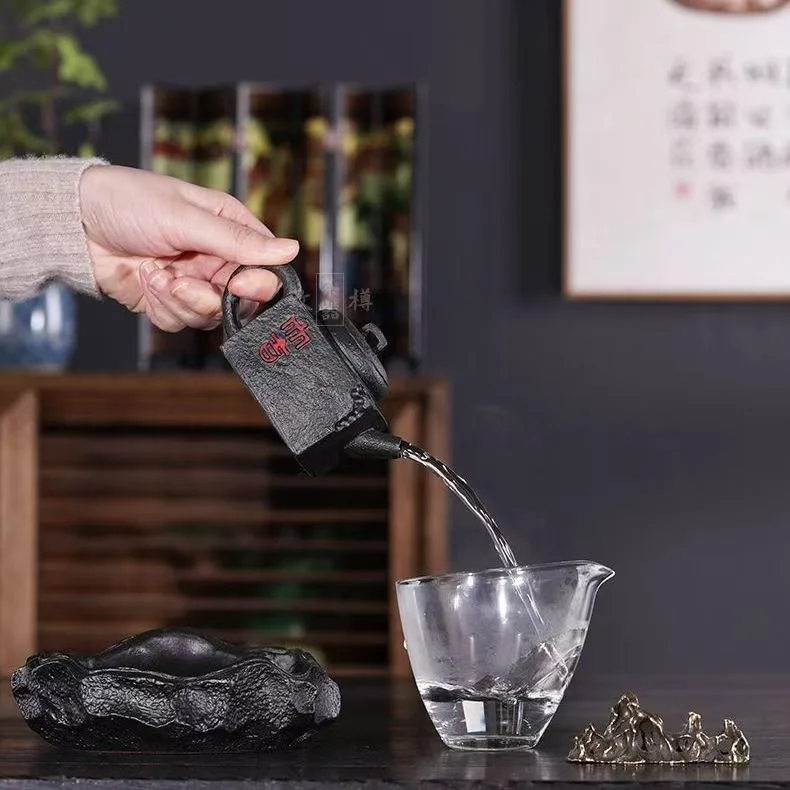
Yixing Duanni Reduction-Fired Square Zisha Teapot 100ml
SKU: NW-007
$84.17 – $119.17/ 把
Price varies by option
Select option
SKU: NW-007-V01
$84.17Duanni reduction-fired square Daji teapot
1
Unit: 把- Sourced direct from Chaozhou
- Delivered in Vietnam
- 15-day returns
- Free replacement if broken in transit
Payment
CODMoMoZaloPayVisaMastercardBank transfer
✓ Direct from Source✓ Vietnam Delivery
Specifications
ClayYixing duanni clay; the black tone comes from the clay after firing
FiringReduction firing; black with a metallic sheen, unglazed and uncoated
CapacityApprox. 100ml
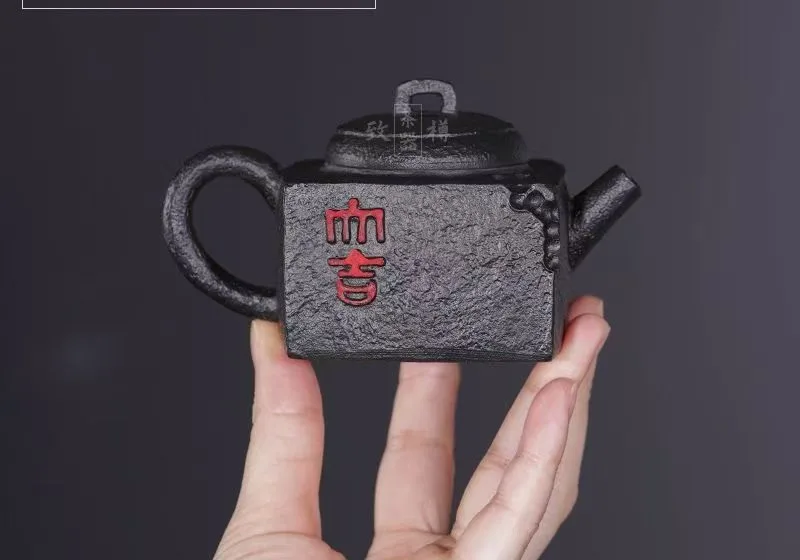
ShapeSquare body, four continuous arrises, short spout, round handle
Surface textureFine raised grain; the clay's own skin after firing
Internal filterBuilt-in filter holes; no separate strainer needed
Lid and mouthOne-handed knob; square lid seats without wobble; wide mouth for easy cleaning
DecorationRed Daji characters on the front, clear strokes and clean edges
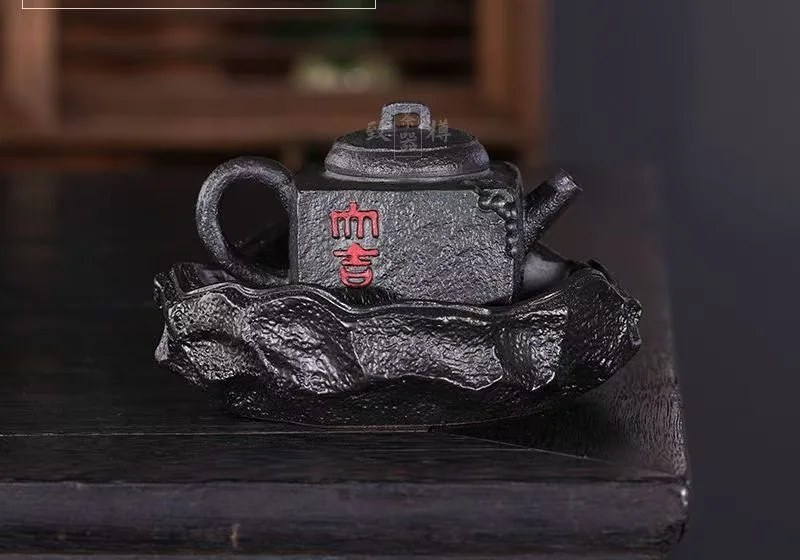
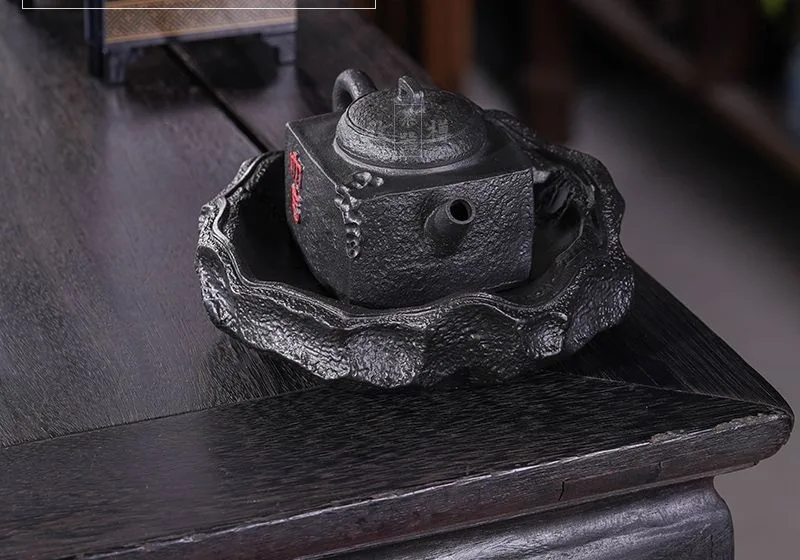
StandSeparate stand, detachable for cleaning; a pot-with-stand option is selected separately
Measured sizeCapacity approx. 100ml; card states diameter 11.3cm (square body, described on the page as width 11.3cm), mouth 5cm, height 6.5cm
Product photos & details
Description
Shape and clay
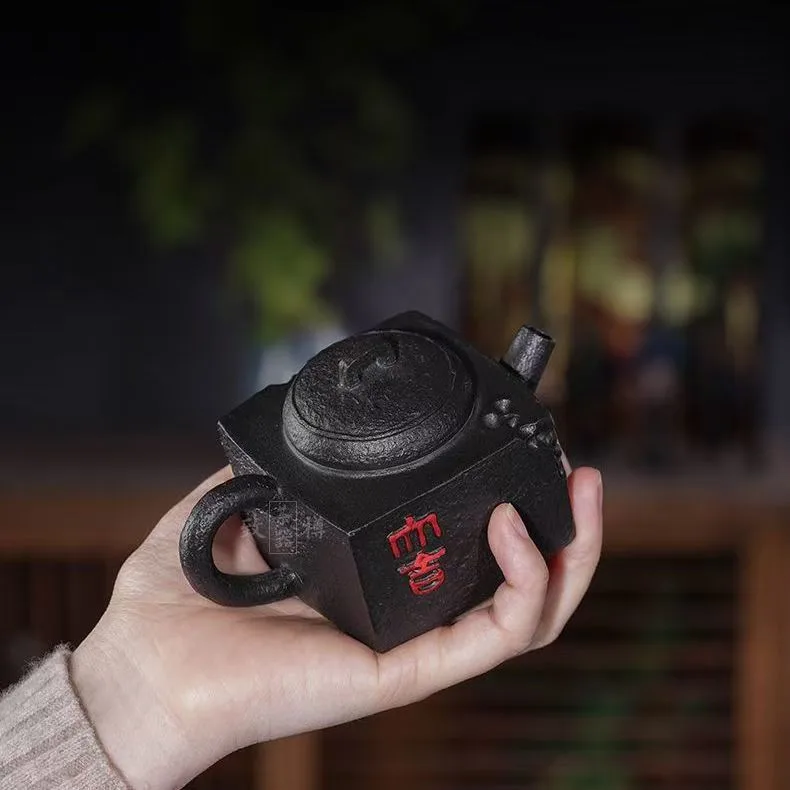
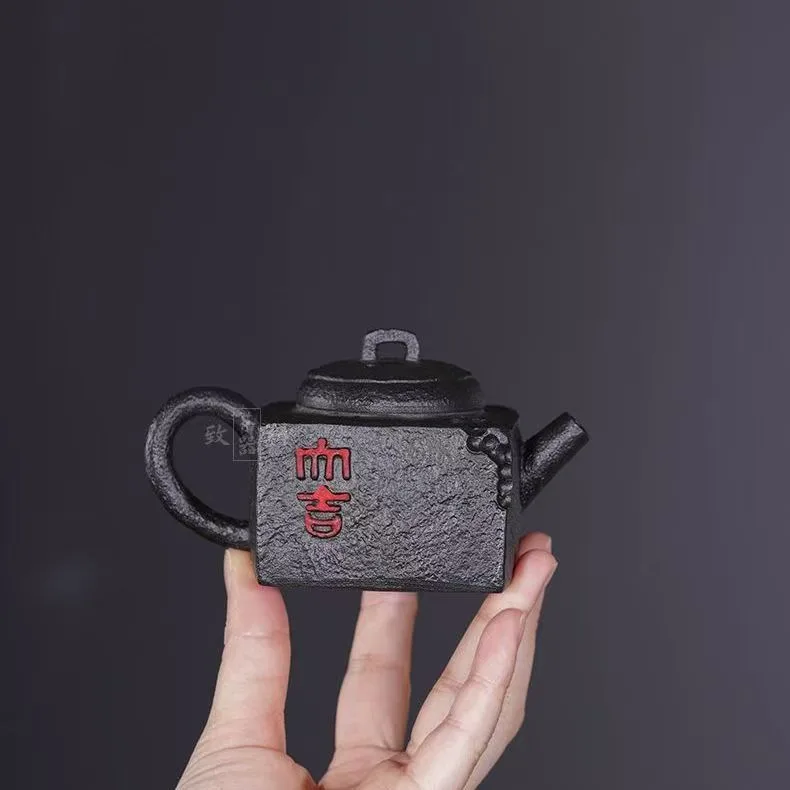
This is a square-bodied zisha teapot, the form Vietnamese buyers usually call a square pot. The body is made from duanni clay and comes out of the kiln in a deep black with a faint metallic sheen, not from a dark coating laid over the surface. Look from the shoulder down to the foot and the tone changes evenly; the four arrises run clean and the corners neither slump nor twist. We stay with what can be seen: the colour comes from the clay and the fire, so daily boiling water has no layer to peel, fade or taint the tea. The pot does not take over the aroma, and weeks of use leave the colour much as it arrived. For drinkers who brew strong tea, that is more useful than a story about where the clay was dug. When checking a shipment, take one photograph in daylight and one under the shop spotlights. Black clay shifts in depth between those two lights, but the transition should stay even throughout and no patch should suddenly turn grey or bright. We kept both angles in the gallery. Photograph the same two angles again when the pot arrives and any difference shows up immediately. Dry your hands before picking it up, so fingerprints do not sit on the very surface you are trying to examine.
Reduction firing and the black-gold tone
This batch was fired by the reduction method, as the specification card states plainly. In simple terms, the atmosphere inside the kiln differs from a normal firing, so the iron in the clay presents a different colour and the body turns black with a metallic cast instead of the usual orange-red or purple-brown. That colour is created in the fire rather than sprayed on: hold a lamp at an angle to the body and the tone shifts slightly as you move, but there is no film you could lift or scrape away. We will not interpret kiln figures on your behalf, and we do not call this a certificate, a grade or a mark of rank. What we suggest is simple. Film the surface under raking light together with a test pour, then compare that clip with the in-stock video we send before you decide. Small differences in depth between pots from one batch are normal; clay and fire do that. A whole body gone grey, a pale patch in one area, or colour broken into obvious blocks is not a shade variation. Set that piece aside and photograph it separately. The metallic cast is also why we recommend two light sources: under a counter spotlight it reads far more clearly than it does by a window, and a single photograph can easily make two pots look like different batches.
The grain, the first thing to touch
Bring the pot close and the surface is covered with fine grains. Run a fingertip across it and there is a slight raised texture, rather like fine abrasive paper that does not scratch. This is the clay's own skin after firing, not an area someone forgot to polish, and certainly not a coating lifting away. The grain should cover the body, the lid and the spout continuously, running right up to the arrises without breaking off or merging into one smooth patch. Dry your hands first, stroke from shoulder to foot, then stroke the lid and the spout; all three should feel much the same. If one area is oddly smooth, it has most likely been rubbed repeatedly while on display, and a photograph is enough to record it. Rinse with clean water and air-dry; do not use a stiff brush, an abrasive or any oil. A surface like this needs no elaborate seasoning and no long soaking in tea. It will settle slightly darker with use, which is a natural change. Keeping to that plain routine also preserves the original grain, which is exactly the detail a customer tests first when they pick the pot up.
Square structure and the stand
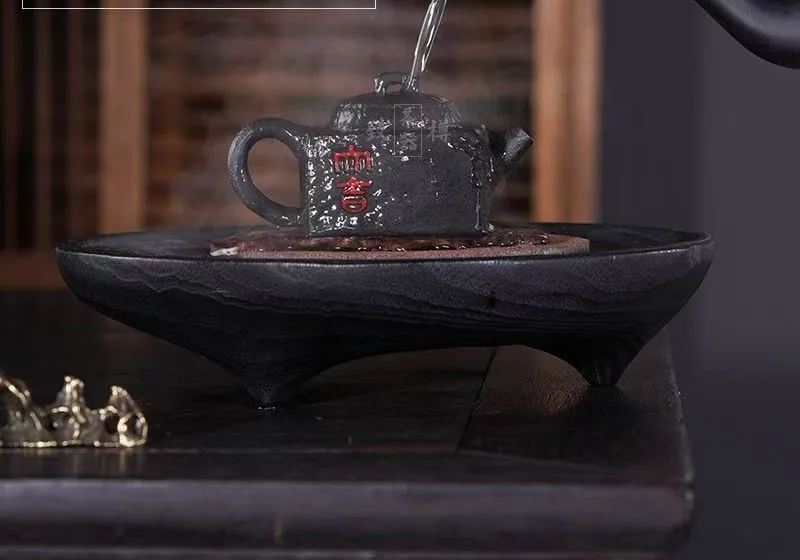
The form follows the classic square line: a squared body, a short crisp spout, a round handle pulled into proportion with the body, and a knob shaped to sit securely under one hand. The four arrises run from shoulder to foot; on a flat table the pot does not rock, and when lifted its weight sits near the middle of the palm. The stand is a separate piece, not a fixed base bonded to the foot, so it sits steadily on a tea tray and still lets you lift the pot to show a guest. The gallery includes the pot held in the palm, a front view, an open lid, a pour, the pot on its stand, and a close view of the stream; together with the detail page at www.tea14888.com it is enough to present the piece to a customer without guessing at anything else. There is a second option consisting of the pot with its stand, and the two options are selected separately on the order page. We describe the single-pot option here. If you want the set with a stand, say so when you enquire and we will photograph that exact set rather than substituting an image of the other one.
Built-in filter holes
The filter holes are inside the pot, so there is no separate strainer to buy. Open the lid and shine a light in: the holes sit on the side where the water leaves, each one clear, with none blocked. For a wholesale buyer the benefit is concrete. It removes one item that has to be washed, stocked and replaced when lost, and the end customer does not have to work out how to fit anything before brewing. Before dispatch we open every pot and check, and we keep that step in the short video. On a batch inspection, take a few pots at random and open them first to see that the holes run continuously and are clear; then add clean water to check the stream and the cut-off; finish by looking over the lid flange and the mouth for chips. Keep those inspection photographs. Shoot the same set of angles on the next batch and comparing workmanship between batches becomes quick rather than a matter of memory. If you want those exact photographs, just ask and we will take them from the batch being prepared for you, not from an old folder.
Measurements and how we write them down
Capacity is approximately 100ml. The specification card also gives diameter 11.3cm, mouth 5cm and height 6.5cm. Because the body is square, we describe that 11.3cm figure on the page as width 11.3cm so it reads sensibly; the number itself is unchanged, not rounded, and not borrowed from another pot. Those four figures come from the card that travels with the batch, and every capacity or size figure on the page refers back to it. 100ml suits brewing one full pot and dividing it into two or three small cups, and it also suits tasting each batch of tea before placing a larger order. Vietnamese buyers plan shelf space by size and count pots per carton by capacity, so one wrong number causes far more trouble than one blank line. That is why anything the card does not state is left blank rather than estimated. If you want a photograph with a ruler placed against the actual pot, message Zalo: 0899286999 and we will put the ruler beside the very pot we are about to ship and shoot it there, not use a stock image. Writing the figures this way also gives both sides one shared set of numbers when quantities are discussed, instead of each party remembering a different version.
Pouring and cut-off
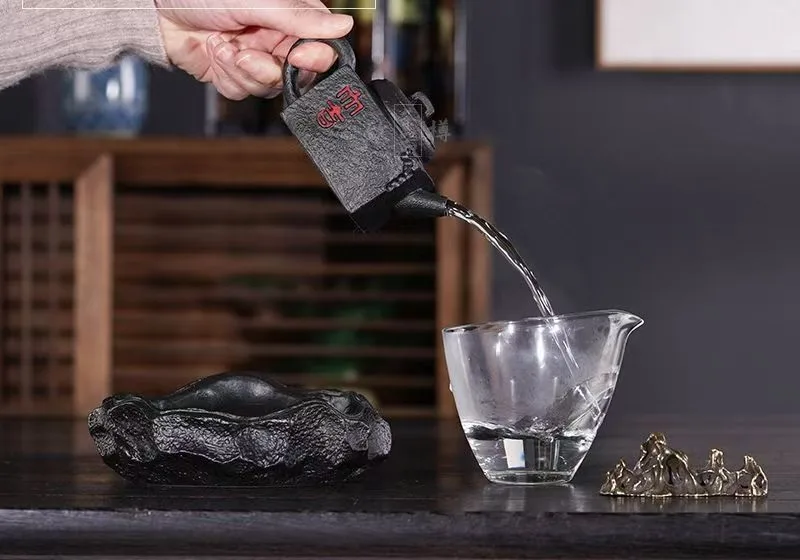
Fill the pot, seat the lid, hold the knob with one hand and tilt: water leaves the spout in one continuous line, without spraying or splitting. Stop and the stream cuts cleanly, with nothing running down the outside of the body or dripping onto the tray. A single pour of clean water checks all three things at once: whether the stream stays in one line, whether the stop is crisp, and whether any water is left on the table. We kept this close-up in the video, including the short pause while the stream cuts, so you can compare it frame by frame with your own sample. We do not publish an exact flow volume, because water temperature, leaf quantity and tilt angle all change it; what can actually be verified is the shape of the stream and the cut-off, and both are visible in the clip. If a pot splits the stream, runs down the body or trails at the cut-off, film that moment and send it over for comparison before signing for the goods. The whole test takes under a minute and reveals most faults in the spout and lid.
Knob, lid flange and mouth
The knob is shaped so one hand can manage the whole sequence: lift the lid to add leaf, close it to pour, without changing hands. The lid flange and the mouth are fitted to a sensible tolerance: seated squarely the lid does not wobble, yet it is not so tight that it sticks. On arrival, do three moves first: seat it, turn it lightly, lift it. Only once all three are smooth should you move on to the pour. The mouth is wide enough that adding leaf and rinsing are both easy, and a light shone inside shows the filter holes and the inner wall clearly. Do not leave tea fragments between the stand and the body, or the next closing will feel slightly gritty. When washing, take the lid off, rinse the body and the flange separately, and let them dry before putting them back. If after a while the lid no longer closes as smoothly as it did, the usual cause is tea deposit on the contact faces: soak it soft in clean water, wipe it away and the feel returns. No oil is needed, and abrasives should never be used on either surface. None of this appears in a single hero photograph, which is why we kept dedicated close-up shots in the short video.
The red characters on the body
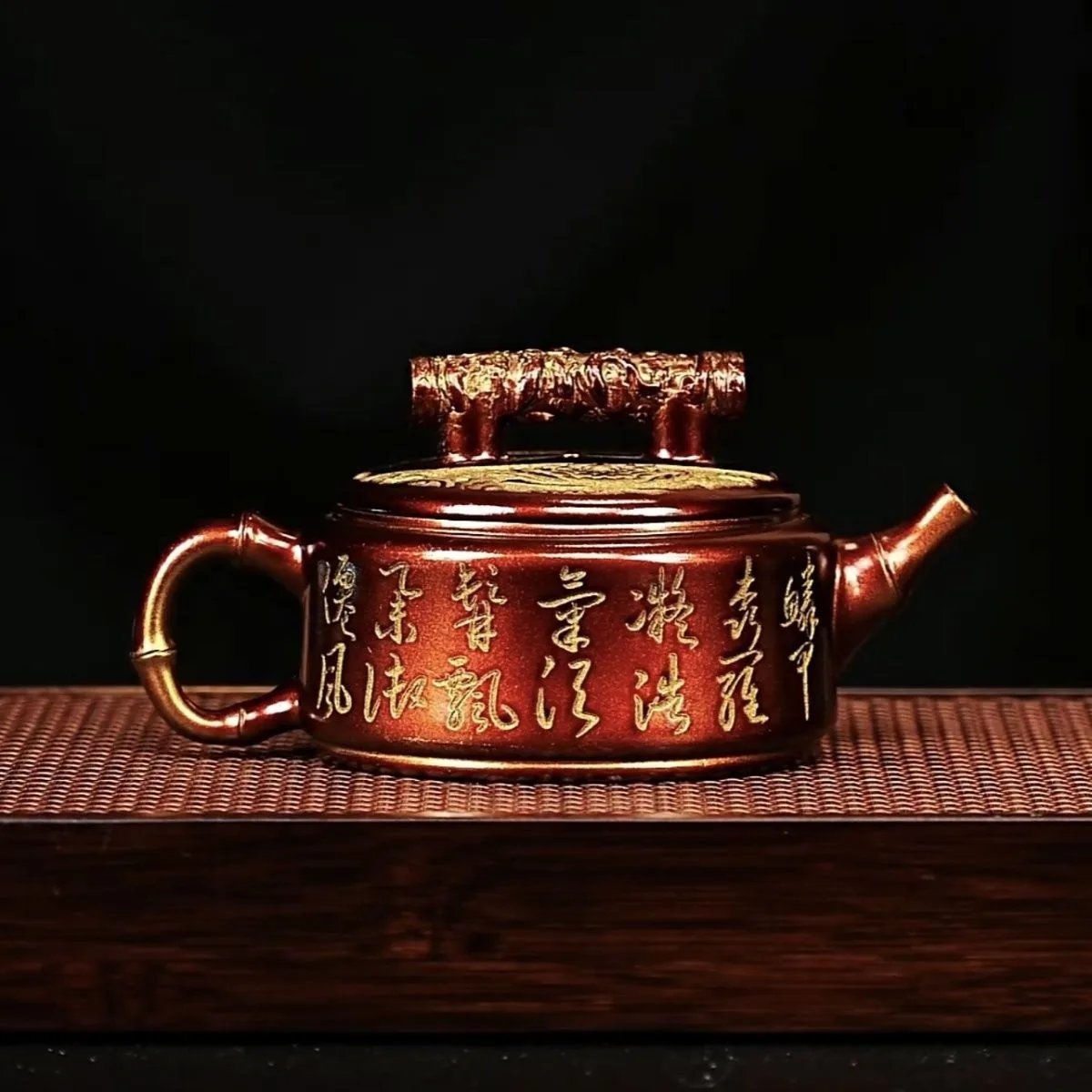
The front of the body carries conspicuous red characters, the one detail that makes this pot easy to remember. The strokes are clear, the edges clean, the placement square, with no smudging or drift; under raking light the red stands out sharply against the black-gold ground. The characters are worked into the body rather than applied as a sticker, so there should be no edge you could peel up. When displaying the pot, turn this face outward: a customer standing one or two metres from the shelf recognises it immediately. We describe it only as a visible decorative detail on the pot. We attach no meaning to it, add no maker's name, and make no claim about prizes or collecting value. During inspection, take one more look to confirm the characters are complete and unscratched, then check that the four arrises still run true. Neither shows up well in a general view, so the gallery includes a dedicated front close-up. If you want any other angle photographed, message Zalo: 0899286999 with the face you need and we will shoot it from the pot being prepared for your order.
Inspection checklist on arrival
Work through it in this order. Set the pot on a flat surface first: are the four arrises clean, does the body stand steady, is there any odd colour block or chip? Then open the lid and shine a light in to see whether the internal filter holes are clear and continuous. Next seat the lid, turn it lightly and lift it; only after those three moves are smooth should you pour. Add clean water once and watch whether the stream stays in one line, whether the stop is crisp, and whether water clings to the outer wall. Finally use a ruler to confirm width 11.3cm and height 6.5cm, fill the pot to check the approximate 100ml capacity, and glance once more at the red characters. If a full carton arrives, you need not run the whole routine on every piece, but we suggest three to five pots at random taken through the complete check, with the remainder opened just to inspect the holes and the mouth. Store the photographs by batch in one folder. On the next order, shoot the same angles again and you can see at once whether the two batches agree. If any step does not match the photographs and video we sent, photograph it and send it over before signing for the delivery. Keeping one fixed set of angles also means a later discussion about a replacement does not turn into an argument about who photographed what and when.
Common questions
Why does the surface feel slightly rough? That is the clay's grain after firing, not a polishing fault and not a peeling coating. Rinse with clean water and let it dry; do not scrape it with anything hard. Will the black fade? The colour comes from the clay and the kiln rather than a coating, so clean water and air-drying are all it needs. Why are there only four figures? We copy exactly what the card states and leave the rest blank; if you need another measurement, we place a ruler against the pot and send the photograph. Will leaf escape through the internal filter holes? The holes are closely spaced, and at normal brewing and pouring angles the leaf stays inside; if one pot lets leaf through clearly, send us a video so we can compare. Can I take the pot without the stand? The two options are separate, so tell us which one you want and we will prepare and photograph that set. One more question comes up often: does a new pot need soaking in tea before first use? It does not. One rinse with clean water is enough and you can brew straight away.
Everyday cleaning and care
After brewing, empty the leaf and rinse the body, lid and stand separately under clean water, then leave them upside down to air-dry before putting them away. The internal filter holes can be flushed once in the direction the water flows; do not poke them with a needle or a stiff brush, and detergent is unnecessary. If the pour stops feeling as crisp as it did at first, tea fines in the holes or on the lid's contact face are the usual cause: soak them soft in clean water and flush, and it clears. Can it go in a dishwasher or a microwave? Neither is advisable. Fired clay reacts badly to sudden temperature changes, and hand washing remains the safest option. If a display piece sits under a spotlight for a long period, move it now and then so one side is not lit continuously. The body is unglazed and uncoated, so there is no need for elaborate seasoning or long soaking in tea; rinsing and natural drying preserve the original colour. That simple habit also keeps the grain from turning shiny where hands repeatedly grip the pot, a common fault on pieces that have sat on display for months.
Using 100ml to taste tea
100ml is not a portion for one person drinking alone; it suits brewing one full pot and then dividing it. Add the leaf quantity you would normally use for one brew, fill with boiling water, close the lid and wait to your usual strength, then pour the whole pot into two or three small cups in one go. The cups come out at nearly the same strength, which makes differences between tea batches much easier to pick out. If you need to taste three or four lots in one sitting, use the same pot, the same water temperature and the same timing for each lot; rinse and dry between lots so the previous one leaves no trace behind. While dividing the tea, notice the cut-off as well, and you have checked the spout in the same motion. Because the filter holes are built in, there is no separate strainer to rest on the tray, and working through several lots in a row becomes noticeably quicker. A small capacity also works well for an in-store comparison: brew the same tea once in this pot and once in the pot you already sell, let the customer taste both, and the difference is clearer than any list of specifications read aloud.
Display and how to present it in a shop
This pot belongs at a height where the red characters sit at eye level: a customer recognises it at once, faster than any introduction. Set the stand slightly in front, lean the lid against the side of the pot, and do one clean-water pour; the short spout producing a single line is the easiest part to talk about. A plain line for retail staff works well: square pot, black-gold grain, filter holes built in, 100ml brewed whole and divided into cups. If a customer asks about capacity, say 100ml and point to the ruler photograph; if they ask whether the colour lasts, explain that it comes from the clay and the fire rather than a coating. The gallery has the pot in the palm, the front view, the open lid, the pour, the pot on its stand and a close view of the stream; together with www.tea14888.com it is enough for a full presentation. If a customer asks about the difference between the two options, say simply that one is the pot alone and one includes the stand, then quote the set they actually want rather than blending the two into a single answer. Short, factual wording keeps its credibility, especially with buyers who only need a few solid numbers before they discuss quantity.
Packing and delivery checks
Before dispatch the body, lid and stand are wrapped separately so the lid flange and the mouth cannot knock against each other in transit. On arrival, count the pieces first and then follow the checklist above. Outer packaging may be dented in transit, but the mouth, lid flange, four arrises and filter holes should show no chips or distortion. If the outer carton shows signs of damp, open it and check the contents before signing, and send a photograph of the carton so we can take it up with the carrier. If you want a full carton, tell us how many pots you plan to display and whether you want stands supplied throughout; we will assemble them from one batch and send photographs of that batch's actual stock for you to confirm first. If you need any further angle photographed, or prefer to see the video before discussing quantity, message Zalo: 0899286999 and we will shoot from the very batch we are about to ship. More products and specifications are at www.tea14888.com. Keeping every exchange tied to photographs and video from the same batch means both sides are always talking about the same pot, and an inspection is far less likely to turn into a disagreement over detail.