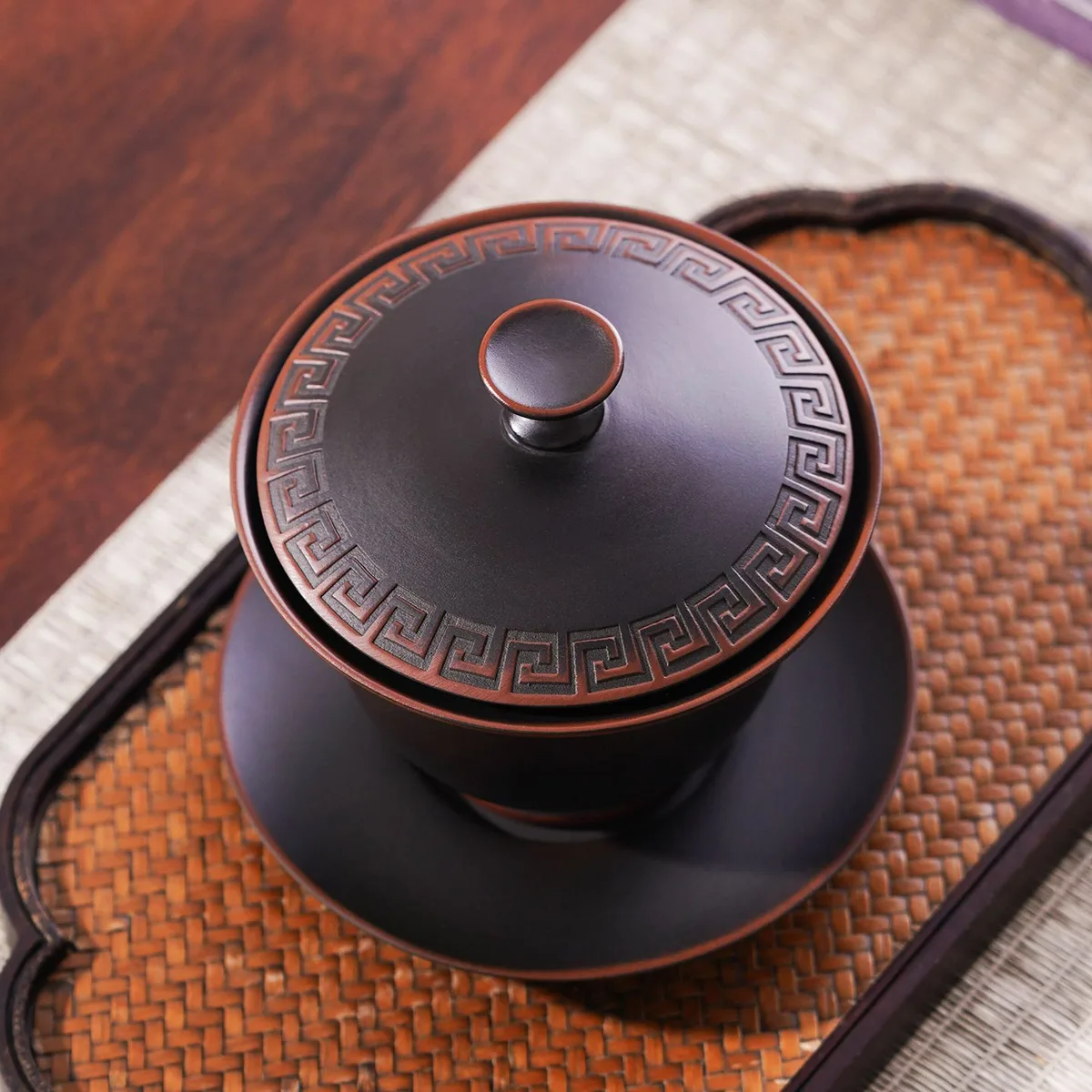
Black Clay Gaiwan with Full-Ring Filter Holes 200ml
SKU: NW-006
$44.17 – $64.17/ 套
Price varies by option
Select option
SKU: NW-006-V01
$44.17black clay gaiwan with full-ring filter holes, gift box
1
Unit: 套- Sourced direct from Chaozhou
- Delivered in Vietnam
- 15-day returns
- Free replacement if broken in transit
Payment
CODMoMoZaloPayVisaMastercardBank transfer
✓ Direct from Source✓ Vietnam Delivery
Specifications
MaterialFired black clay, unglazed and uncoated
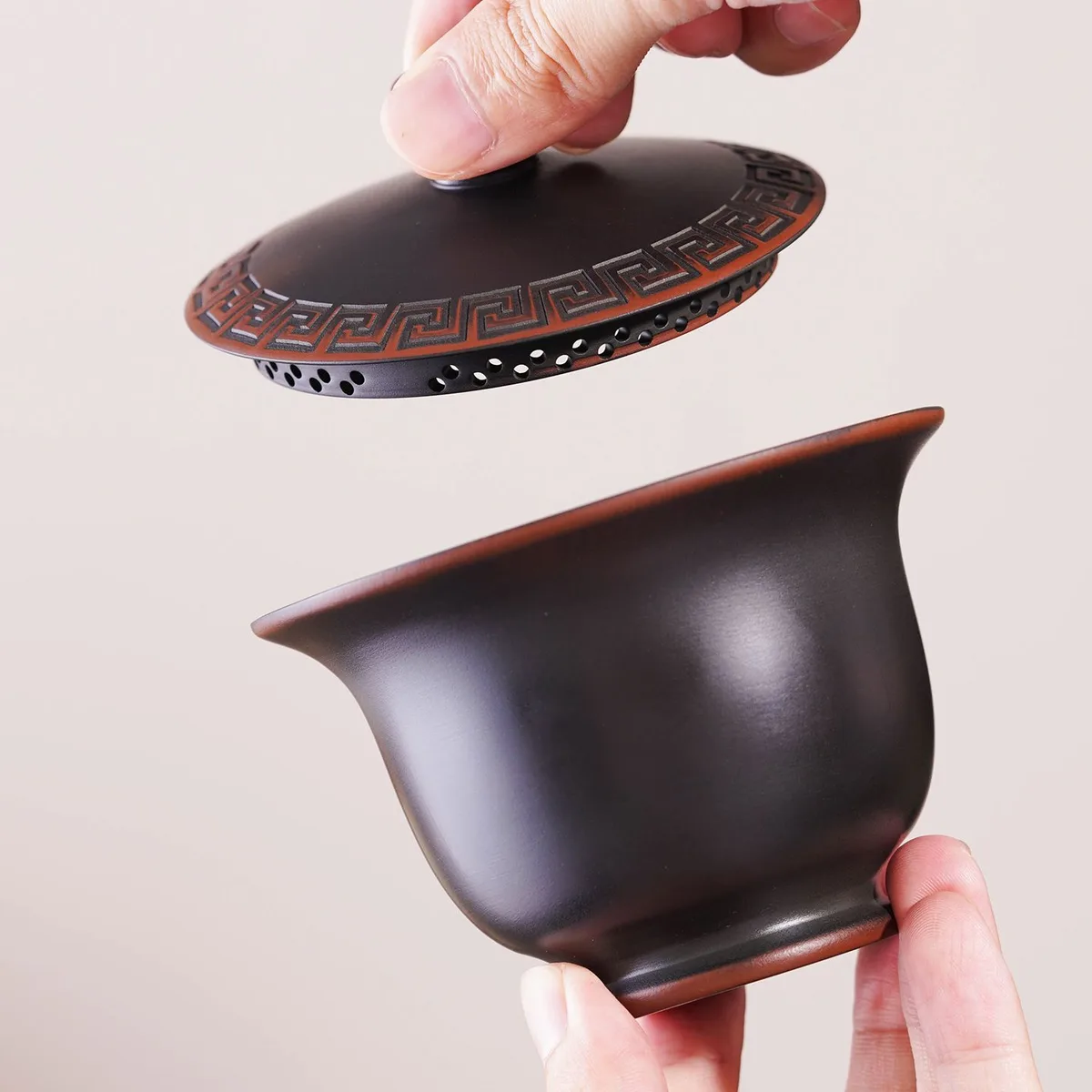
Filter holesA continuous ring of filter holes around the lid rim; no separate strainer needed
CapacityApprox. 200ml
Lid and knobRound knob for one-handed use; sits true without wobble or sticking
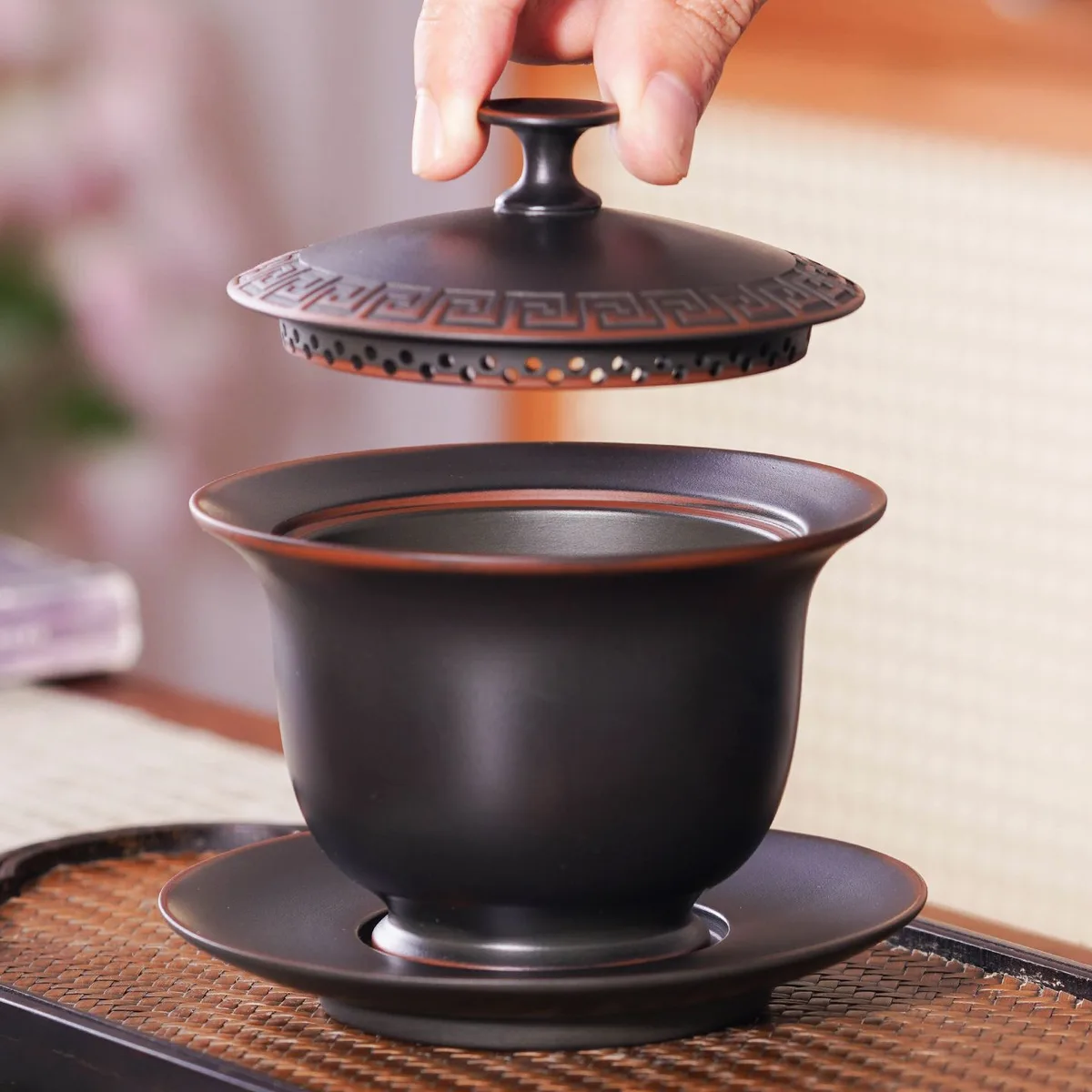
SaucerSeparate saucer, detachable for individual cleaning
Matching cupConical cup, approx. 9cm mouth, 5.5cm high, approx. 100ml
PatternA band of key-fret pattern on lid rim and bowl rim, evenly spaced
SurfaceThe black tone comes from firing; rinse with clean water and air-dry
Measured sizeCapacity approx. 200ml; mouth 9.9cm, width 11cm, height 10.3cm; matching cup approx. 9cm mouth, 5.5cm high, approx. 100ml
Product photos & details
Description
Shape and clay
This is a lidded tea bowl, the kind used to brew tea and then pour it into small cups. The body is made from dark-fired clay. The black tone runs evenly from the rim down to the foot, and a close look shows a fine, smooth surface rather than a dark coating laid over the top. A band of carved pattern runs around both the lid edge and the bowl rim. The lines are cut to an even depth, and a finger moving along the edge finds no burrs or sharp spots.
We only describe what can be seen. The colour comes from the clay after firing, so daily boiling water leaves no layer to peel, fade or add an off taste to the tea. We describe the bowl as it is: the colour, the carved lines and the filter holes are the whole basis for your check. For a drinker who likes strong tea, a bowl that leaves the aroma alone matters more than a long history. If you need a close photograph of the surface, we shoot the bowl that is actually in stock, not an old file from an archive.
A full ring of filter holes
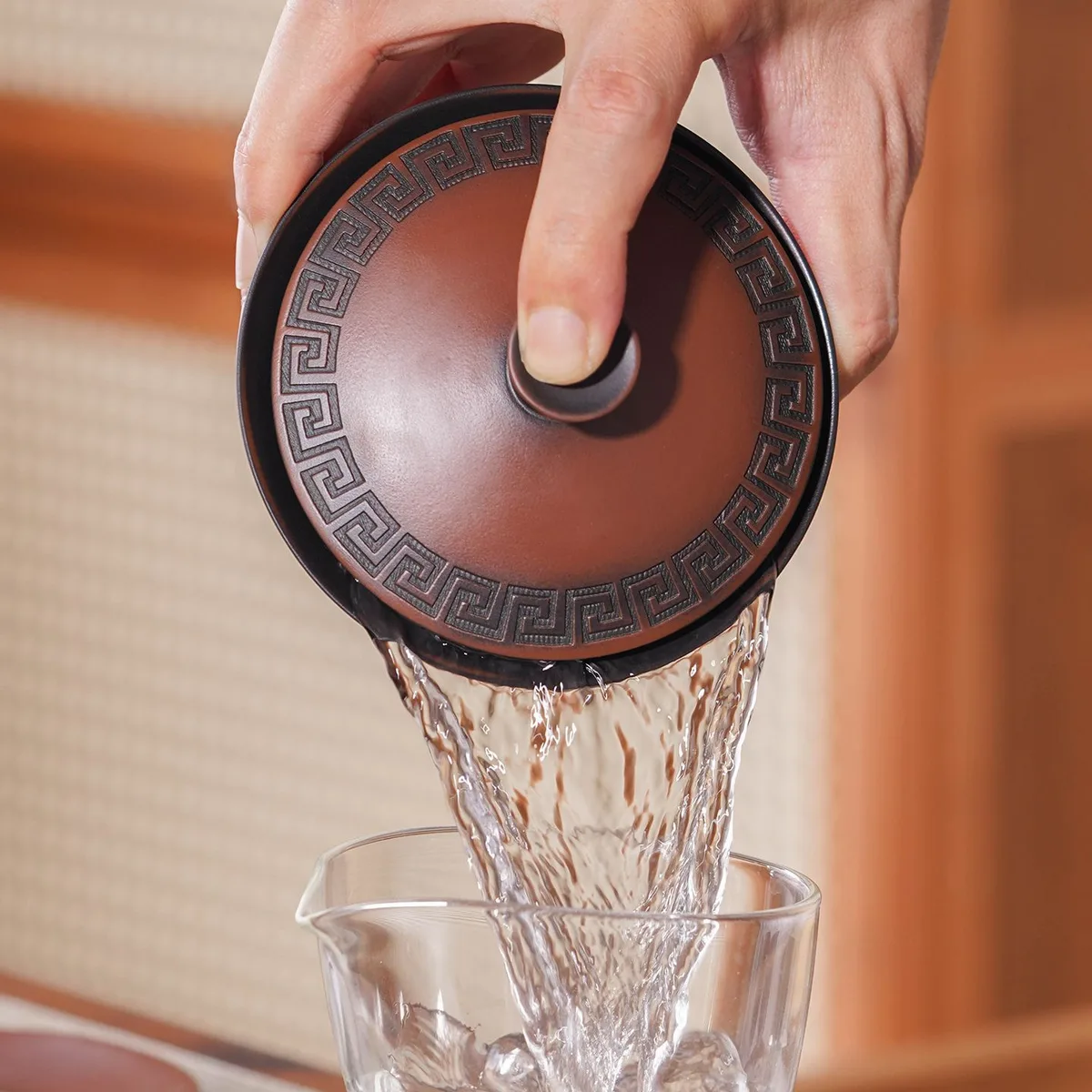
This is the first thing worth checking. Many lidded bowls have a few holes on one side of the rim, or need a separate strainer. Here the filter holes run all the way around the lid edge. With the lid seated, water leaves evenly around the ring while the tea leaves stay inside the bowl.
Turn the lid over and look. The holes follow one continuous circle, with nearly equal spacing between them. Hold the lid up to the light and every hole shows through, with none blocked. Before dispatch we turn each lid over and check it, and we keep that step in the short video. For a buyer who imports and resells, the benefit is plain: there is no extra strainer to buy, no need to explain how to fit one, and one fewer item to wash, stock and lose. A customer can pick the bowl up and use it at once.
If you want to compare this with your own batch, send us a message. We will film the lid being turned over slowly, with a close shot of the holes, and send it before you settle the quantity.
Pouring and cut-off
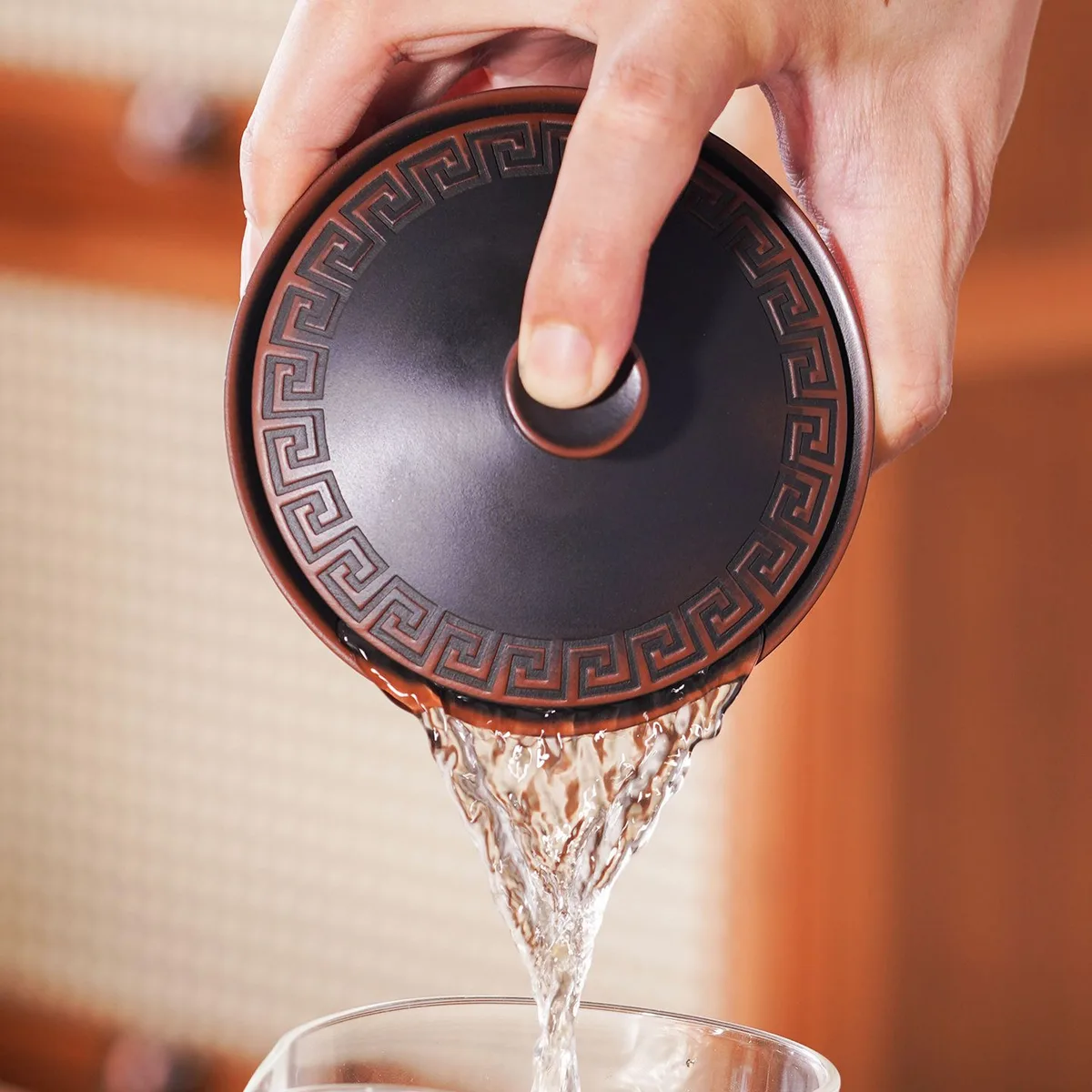
Fill the bowl, seat the lid, hold the knob with one hand and tip it forward. Water from the ring of holes gathers into one falling stream that stays together without spraying. Lift your hand and the stream stops cleanly. It does not run down the outside of the bowl or drip onto the tray.
You can check all of this with one pour of plain water. Watch whether the stream holds a line, whether it stops cleanly when you lift your hand, and whether a wet mark is left on the tray. In our video we keep the short pause after the pour instead of cutting it away, so you can compare it frame by frame with a bowl you already have.
We do not print an exact figure for how much water comes out in one pour. Water temperature, the amount of leaf and the angle of the wrist all change that figure, so writing one down would only invite a mistake. The two things that can be checked are the shape of the stream and the cut-off, and both are clear in the video.
Measurements and how to check them
The bowl holds about 200ml. The mouth is 9.9cm across, the widest point is 11cm, and it stands 10.3cm high. These figures come from the specification card that travels with the goods. Two order pages for two different set options carry the same figures for the bowl itself, so we copy them as written, without rounding and without borrowing numbers from another bowl.
200ml suits brewing one strong bowl and then dividing it between two or three small cups. It also suits testing several tea lots before placing a larger order. Buyers in Vietnam often plan by measurement: how many pieces fit on a shelf, how many sets fit in a carton. A wrong number causes more trouble than a missing one, which is why we only print figures we can support.
If you want a photograph with a ruler placed against the actual bowl, contact us at Zalo: 0899286999 and say which angle you need. We put the ruler beside the exact piece that will ship and take the shot on the spot. The full image set and video are at www.tea14888.com.
Knob, lid edge and saucer
The knob is round. One hand on it controls both opening and closing, so you can lift the lid to add leaf, set it back and pour without changing hands. The lid edge and the bowl rim fit with the right amount of play: set square, the lid does not wobble, yet it never jams so tight that it is hard to lift.
When a shipment arrives, try three moves first: set it square, turn it lightly, lift it off. If all three are smooth, move on to the pour. The saucer is a separate dish, not a foot fixed to the bowl. It sits steady on a tea tray, makes the bowl easy to carry, and lets you wash the body, lid and dish separately before drying. Keep tea fragments out from between the saucer and the foot, or the next time the lid is seated it may feel slightly rough and seem stiff.
The small cup that comes with it
This option includes one small drinking cup, about 9cm across, about 5.5cm high and about 100ml. It has a wide, flared shape, feels light in the hand, and lets strong tea cool at a comfortable pace. The body, lid, saucer and cup together make one bowl and one cup set, ready to place on a shop shelf or bring to a table when guests arrive.
Many buyers take a single set first to inspect the holes, the pour and the measurements, then discuss a larger quantity. We are happy to work that way. A second option on the page is a gift box, and since the two options are selected separately, the contents differ. This description covers the set with the drinking cup. Tell us which option you want when you enquire, and we will photograph that exact set before packing.
The clay test sheet and extra documents
A few seconds of the video pass over a sheet of paper showing clay test results. It is a shot of the seller holding up a document. We draw no conclusion from it and will not read the figures on that sheet on your behalf. If you need to see the whole page clearly, or want further documents for this particular batch, contact Zalo: 0899286999 and list the items you need. We photograph the current batch again rather than reusing an old file.
You can also ask for: ruler photographs, a close shot of the lid turned over to show every hole, a slow clip of a full bowl pouring out, and detail shots of the foot and lid edge. Everything comes from the piece that will ship. We send these first so you can decide in your own time, with no pressure to confirm a quantity on the spot.
A checklist for the day the goods arrive
Work through it in this order. First turn the lid over: do the holes run in one full ring, is the spacing even, and does light pass through all of them. Set the lid back: does it sit still, and does it lift off easily.
Pour plain water once: does the stream hold a line, does it stop cleanly, and is there any water on the outside of the bowl. Then look at the body, lid, saucer and cup separately: is the carved band continuous, is the black tone even, and are there any chips or odd patches. Finally put a ruler to the 9.9cm mouth and the 10.3cm height, and fill the bowl to check the roughly 200ml mark.
If any step does not match the photographs and video we sent, take a picture and send it to us before signing for the parcel. We will compare notes with you and answer the same day, and sorting it out at that point is still far simpler than later.
Common questions
Do tea leaves escape through holes in the lid edge? The holes are set close together in a ring, and with normal leaf and a normal pouring angle the leaves stay in the bowl. If one bowl clearly lets leaves through, film it and send the clip so we can check that piece on its own.
Will the black colour fade? The colour comes from the clay after firing, not from a coating. Rinse with clean water and let it air dry. Do not scrub the surface with anything hard or abrasive.
Why are there not more measurements? We print every figure on the specification card and estimate none of the rest. Tell us which number you need and we will put a ruler beside the bowl and photograph it.
Can I take the bowl without the cup? The two options are chosen separately on the page, so please name the set you want in your message. We prepare and photograph the set you picked and do not change its contents.
Brewing with 200ml
200ml is not a portion for one person drinking alone. It works better when you brew a full bowl and divide it. Add the amount of leaf you normally use, fill with boiling water, put the lid on and wait until it reaches the strength you like, then pour into two or three small cups in one go. The cups come out close in strength, which makes differences between tea lots easier to spot.
If you need to test three or four lots in one session, use the same bowl, the same water temperature and the same waiting time for each lot. Rinse with clean water and let it dry before moving to the next lot, so the previous aroma does not stay behind. While you divide the tea, watch whether the stream stops cleanly, and you have checked the pour once more. Because the filter holes sit in the lid edge, there is no separate strainer to rest on the rim. The table stays tidier and a run of several tests takes less time.
Placing it in a shop and explaining it
Put this set at eye level with the lid edge. A customer sees the ring of holes at a glance, faster than listening to a long explanation. When displaying it, lean the lid against the bowl, set the saucer in front, place the cup to the right, and pour plain water once so the visitor can watch. Water leaving around the whole lid edge is the easiest detail to explain.
One short line for shop staff works well: no separate strainer, the leaves stay in the bowl, the water leaves around one full ring of the lid. If a customer asks about capacity, say 200ml and point to the ruler photograph. If they ask whether the colour lasts, say it comes from the fired clay and there is no coating. The image set includes a top view, an open lid, a lid turned over to show the holes, a pour, a bowl on its saucer, and a full tea-table scene. Together with the detail page at www.tea14888.com, that is enough to present the product without guessing at anything.
Packing and checking on arrival
Before dispatch the body, lid, saucer and cup are wrapped separately, so the lid edge and bowl rim do not knock against each other on the way. When the parcel arrives, count the four pieces first, then follow the checklist above. The outer box may pick up creases or pressure marks in transit, but the bowl rim, the lid edge and the filter holes should show no chips or distortion.
If you plan to order a full carton, tell us how many sets you want to display and whether the drinking cups should all be the same. We gather one batch, send a photograph of that batch for your confirmation, and only then pack it. If you want another angle photographed, or prefer to see the video before discussing quantity, contact Zalo: 0899286999. Every photograph and clip comes from the batch that will ship, not from a display sample. Other models are at www.tea14888.com.